
Some flower shows are remembered for their weather, and this one will be. The inaugural RHS Badminton Flower Show ran from 8 to 12 July 2026 on the Badminton Estate in South Gloucestershire, arriving on the calendar in the same year the Hampton Court Palace Garden Festival moved to a biennial schedule. It was a debut with a lot to prove, and it made that debut during a heatwave. Temperatures sat near 36 degrees for most of the week, with full sun and little relief. It was hard going for visitors, and harder still for the roses. And yet the roses coped. If you wanted proof that these plants are tougher than their delicate looks suggest, the week gave it to you.
For a rose lover, the show was a pleasure, if a slightly sun-baked one. Roses turned up across several show gardens and throughout the Floral Marquee, in a mix of established David Austin favourites, heritage nursery displays, and clever design work that used roses as more than decoration. Here is what stayed with me.
The three gardens where roses stole the show
1. The Archers 75th Anniversary Garden - English roses at their best
This was the finest rose garden of the show, and it was not a close contest. Designed by Jo Thompson to mark 75 years of the BBC radio drama, it put roses at the very centre, which is exactly what you would hope from a designer with her long history with the flower. The planting leaned on true English garden roses, all supplied by David Austin.
Throughout the plot, specific English Roses were chosen to enhance the relaxed, informal planting style.
Cascading climbing roses framed the farmhouse doorway, creating an inviting entrance. Rosa Ghislaine de Féligonde gave the garden height and air with its loose, generous growth. In the borders, the delicate Scarborough Fair added soft, peony-like blooms that danced in the breeze, while Tottering-by-Gently and The Lark Ascending brought bright bursts of cheerful yellow and orange that kept pollinators buzzing all week long.
The King's Rose contributed striking striped blooms of fuchsia and white. Climbing up the wooden supports, Rosa Mary Delany offered lush, elegant pink flowers with a classic, repeat-flowering habit that lent the garden a timeless, rustic charm. Rosa Kew Gardens, meanwhile, gave the space a welcome punch of simple white, its understated elegance matching the relaxed countryside feel of the farm garden perfectly.
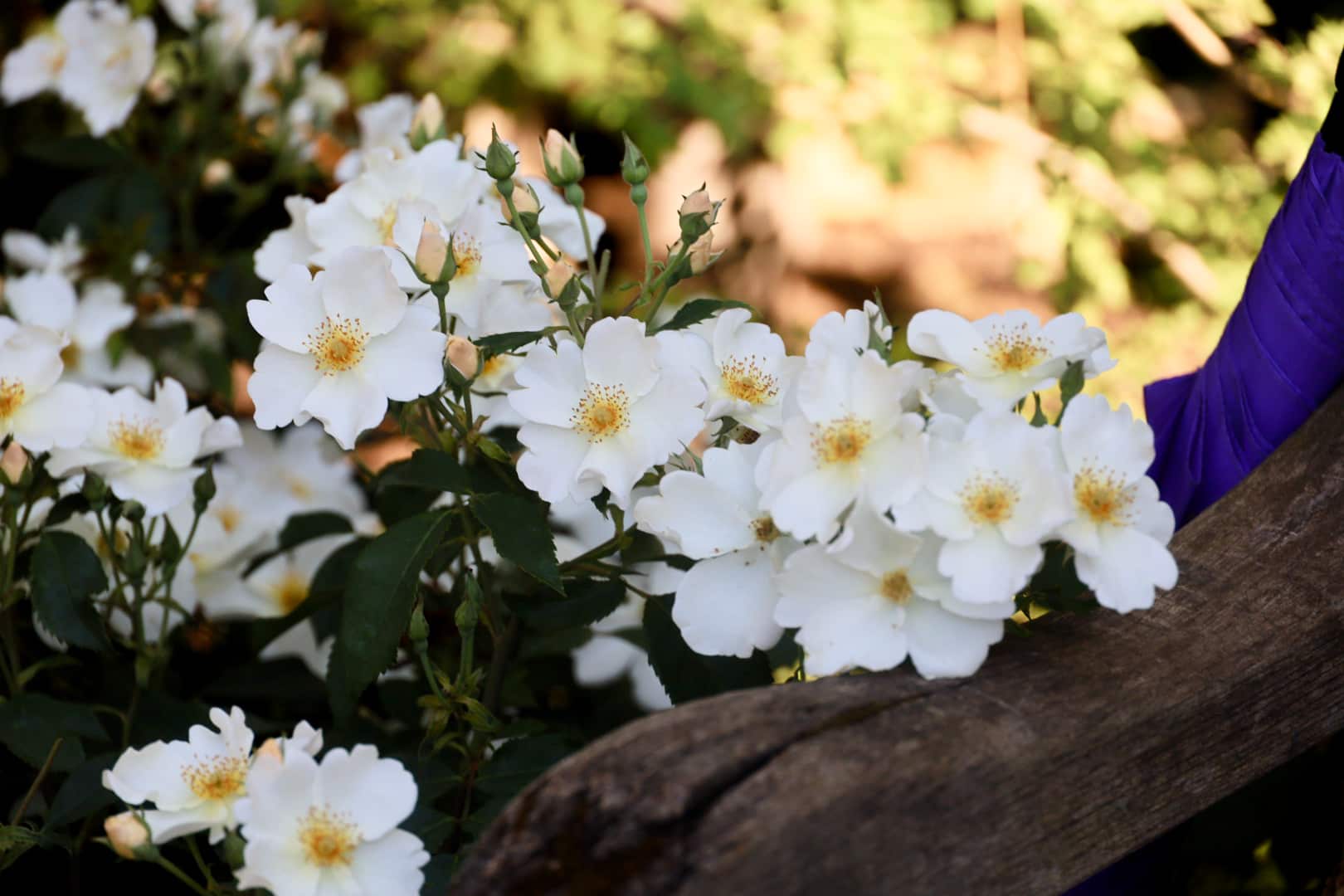
Rather than being cordoned off into formal beds, these roses blended perfectly with the perennials, shrubs, and edible crops, proving just how naturally they belong in a traditional cottage setting.
What I loved was not only the roses but the care behind everything around them. The attention to detail was genuine, not staged. There was also a lovely lady on hand who happily told visitors stories about the plants and knew every variety by name, which is rarer than it should be at these events. Walking through slowly, stopping to smell each bloom and look closely, was the highlight of my day.
2. Honing Heritage, by Nick Leitch
Highly commended in the RHS Environmental Innovation Award category, this was another richly planted, distinctly British garden, and one that nodded openly to Gertrude Jekyll. It pleased me the moment I saw it, thanks to its lush pink roses and unmistakably English style.
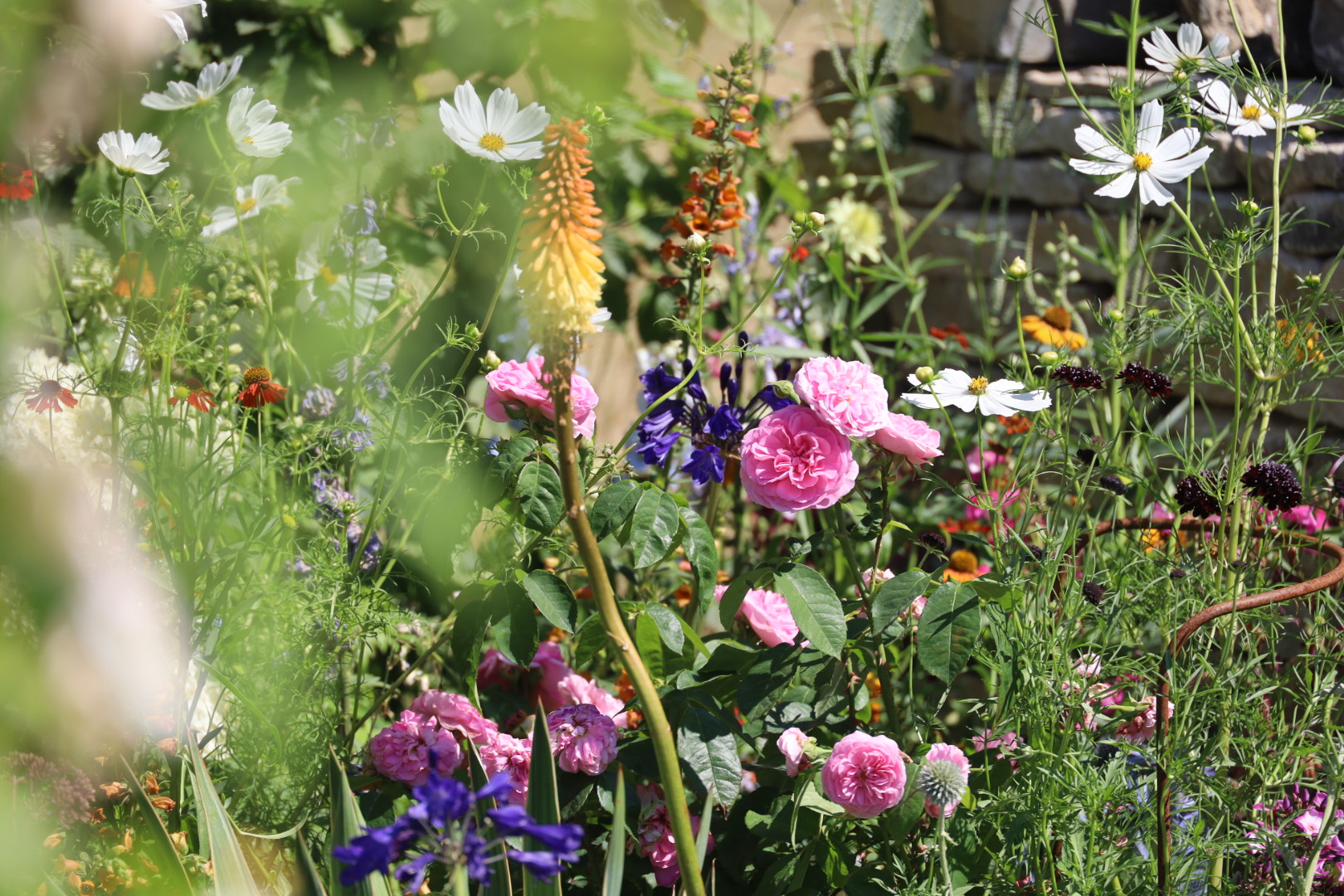
The materials did a lot of the work. Beautifully built dry-stone walls, reclaimed stone, and a central iron gazebo forged by local blacksmith Matt Potts gave the space a timeless Cotswold feel, while quietly reinterpreting those old craft traditions for today. The flagstone paths were laid with small gaps on purpose, letting Nigella damascena and other self-seeders creep through. That single decision created a lovely tension between firm architecture and soft, natural planting, which is the heart of the Jekyll approach. Rosa Gertrude Jekyll herself paid direct homage to the Arts and Crafts tradition, set among Nepeta and Yucca glauca, plants chosen with a changing climate in mind.
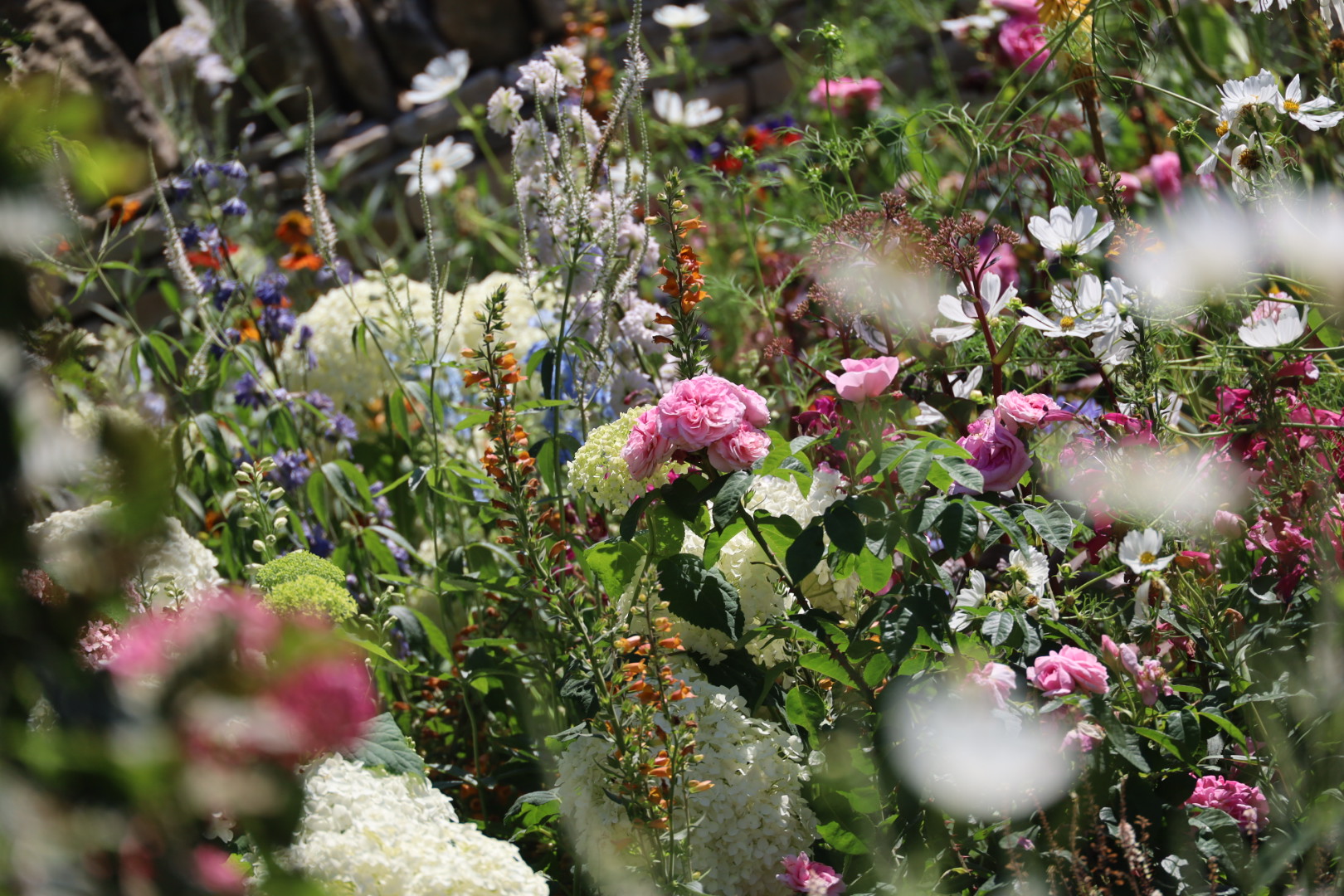
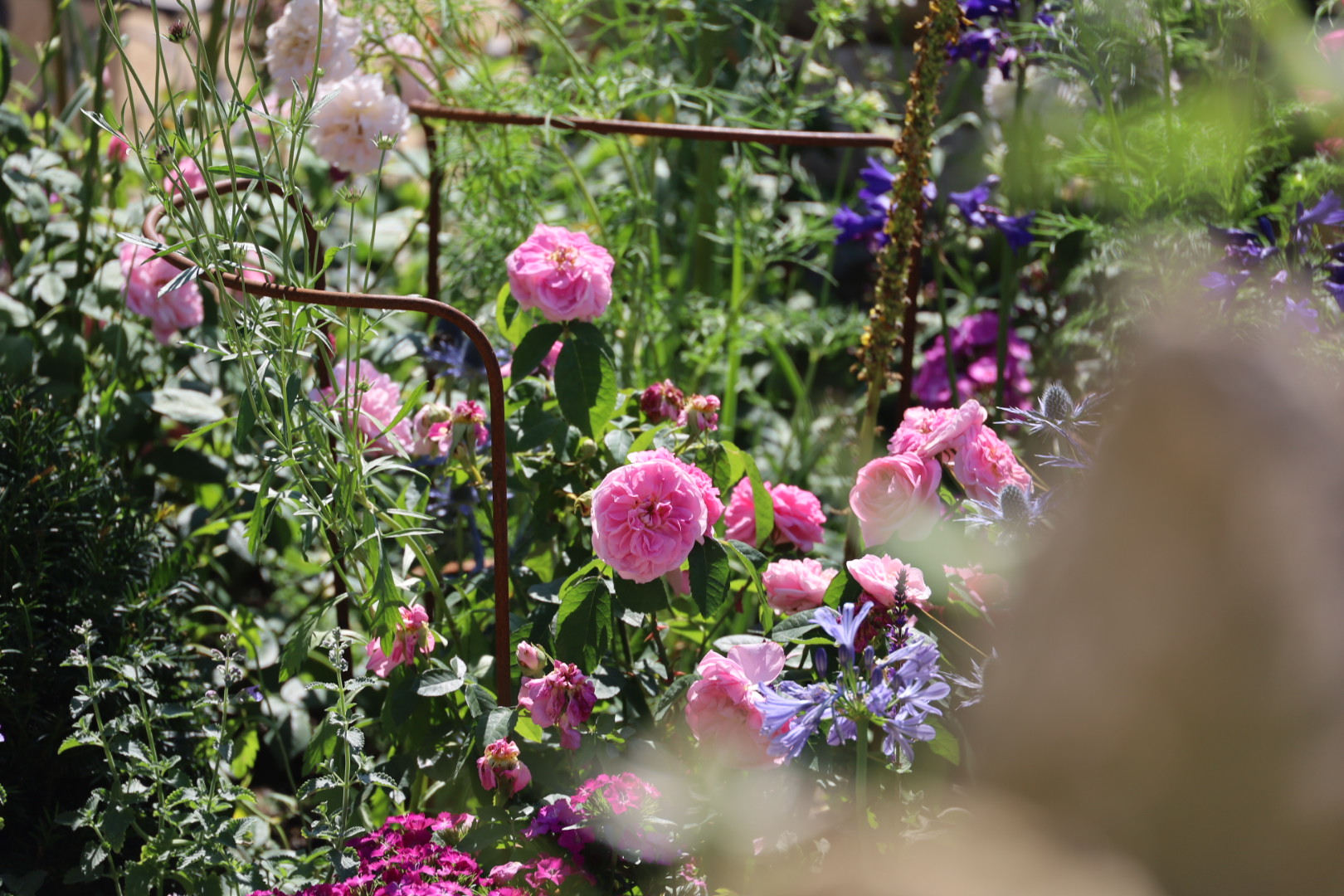
The palette ran through pinks, violets, whites, and touches of yellow and orange, with pinks and whites dominant. White hydrangeas, violet delphiniums, white cosmos, and yellow echinaceas surrounded a good number of roses, and the central metal structure carried a variety of climbers. All were pink, all clearly David Austin, and all subtly different from one another. I suspect Mary Delany, Blush Noisette, and Gertrude Jekyll, but I cannot say for certain. No labels were on show, no plant catalogue was provided at the event or online, and the strong sun may well have lightened some blooms from their natural shade. That guesswork is a small frustration I will come back to.
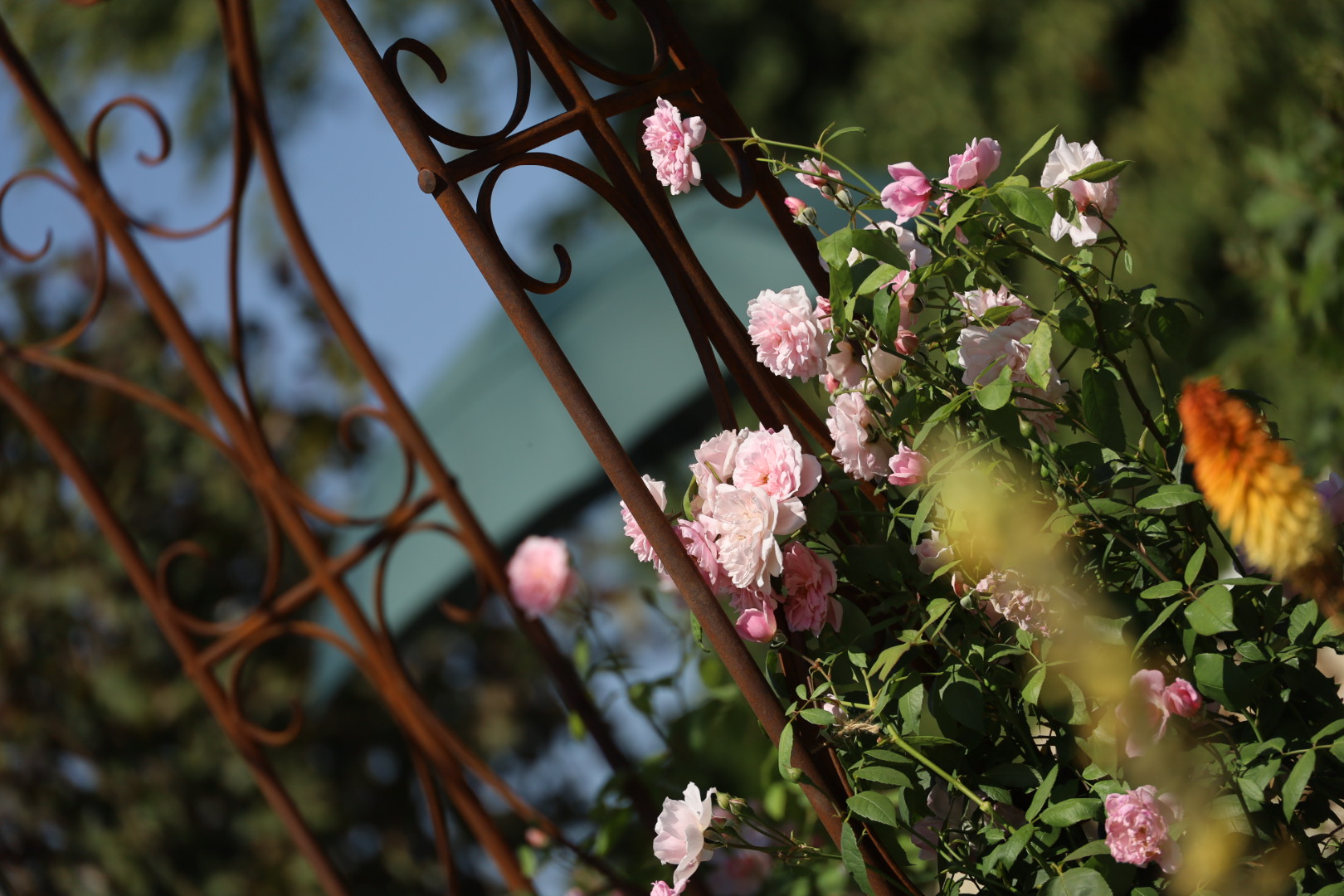
The garden had one more gift. I sat for a while in the shade of a nearby shed and watched it through an opening in the stone wall, breathing in the scent of the roses drifting across. For a few minutes in a very hot week, it was pure peace.
3. Perfume Pavilions
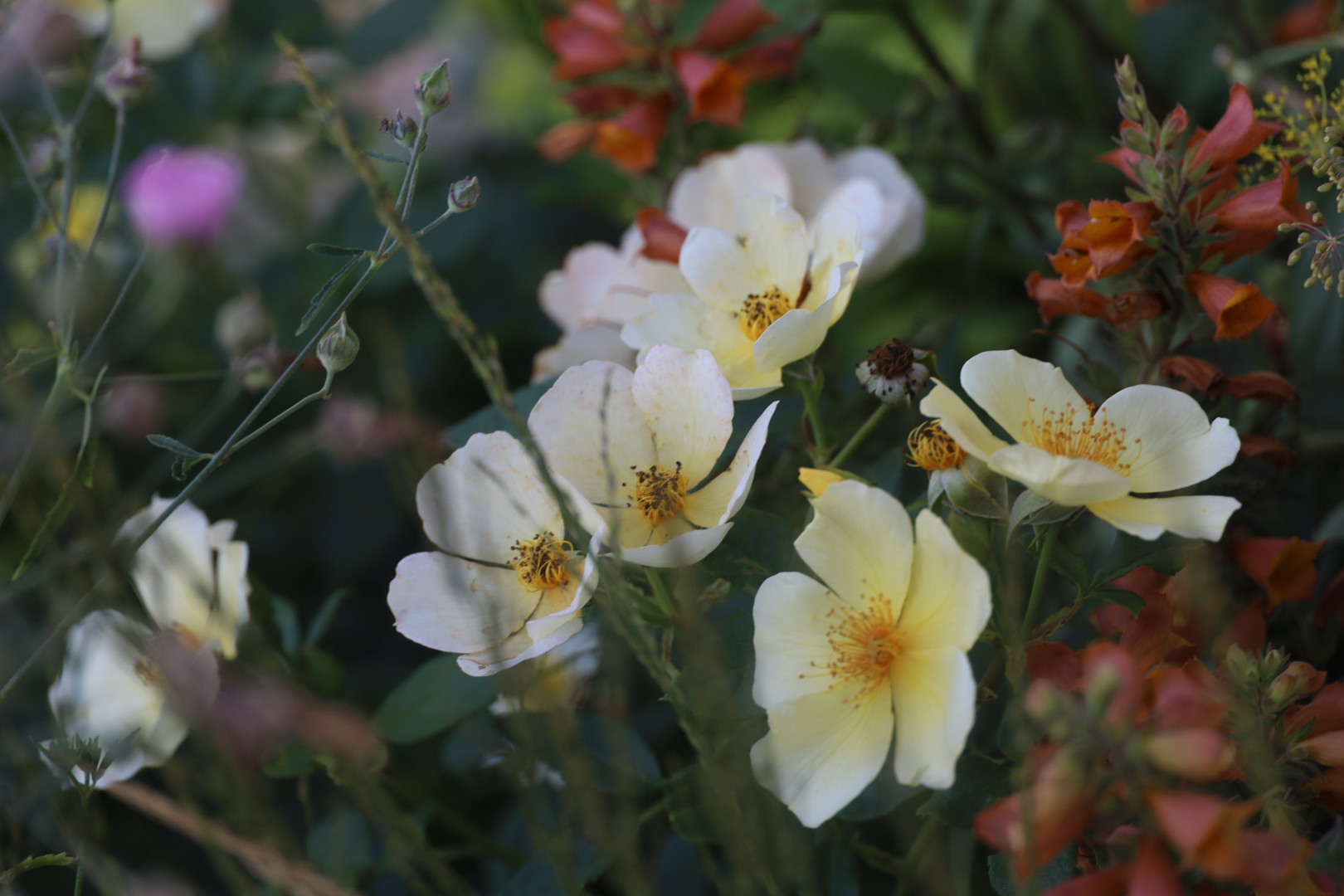
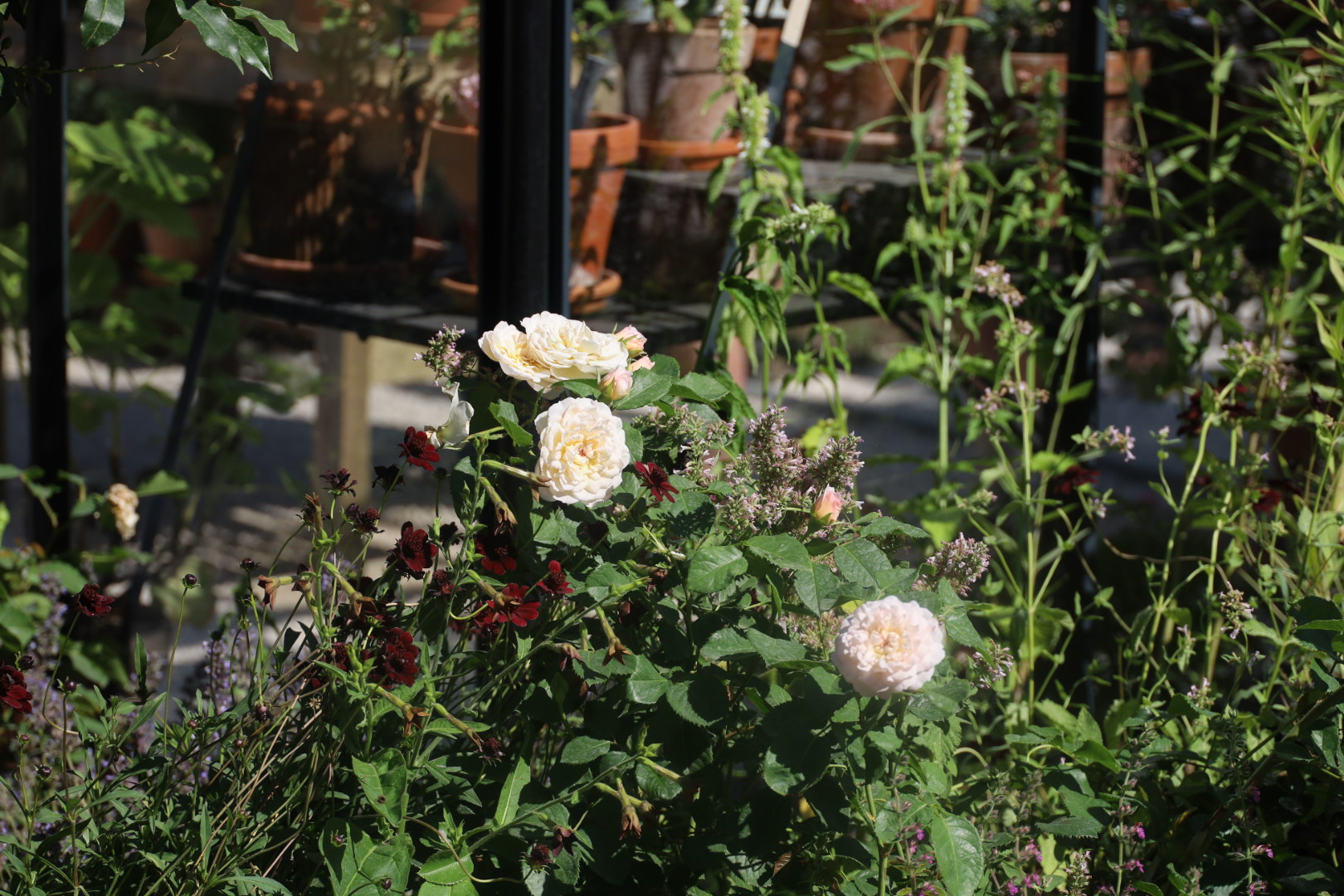
Designed by Nicholsons, the team of Liz Nicholson, Freddie Gibbs, Ruby Simpson, and Dean Parsons, this RHS-commissioned garden used roses as storytelling. Handcrafted willow shuttlecocks supported climbing scented roses and jasmine, a neat reference to both the origins of badminton and the Beaufort family. It also honoured Mary Somerset, Duchess of Beaufort, the 17th-century botanist tied to the estate, weaving together fragrance, heritage, and place.
The roses here were lovely and, to their credit, flowering hard in the heat. They were not quite as lush as those elsewhere, and by the time I visited on Saturday a few showed signs of heat exhaustion. With almost no shade and a full week of blasting sun, that was no surprise. They were beautiful all the same, and honestly, holding up at all in those conditions was an achievement.
Roses in the smaller corners
Plenty of roses turned up in the smaller gardens too. Down by the lake, the pocket planting displays were worth a slow wander. The yin and yang display held some lovely pink roses, and Dorothy House: Shared Breath offered warm orange and yellow blooms. Electuary, by Joshua Fenton, deserves a mention as well. It was a herbal, bee-friendly garden built around native species such as hawthorn, dandelion, nettle, and borage, with the standout climbing red rose linked to the space (it sadly was impossible to identify name of the rose.)
If I have one honest criticism, it is this. The show leaned heavily on heat-tolerant planting, which was the sensible choice given the weather, and echinacea in particular stood out everywhere. But I would have loved more roses, and more of the refined English heritage design that suits them, rather than so many gardens built around rusted metal and stone. That is a matter of taste, and mine runs to roses.
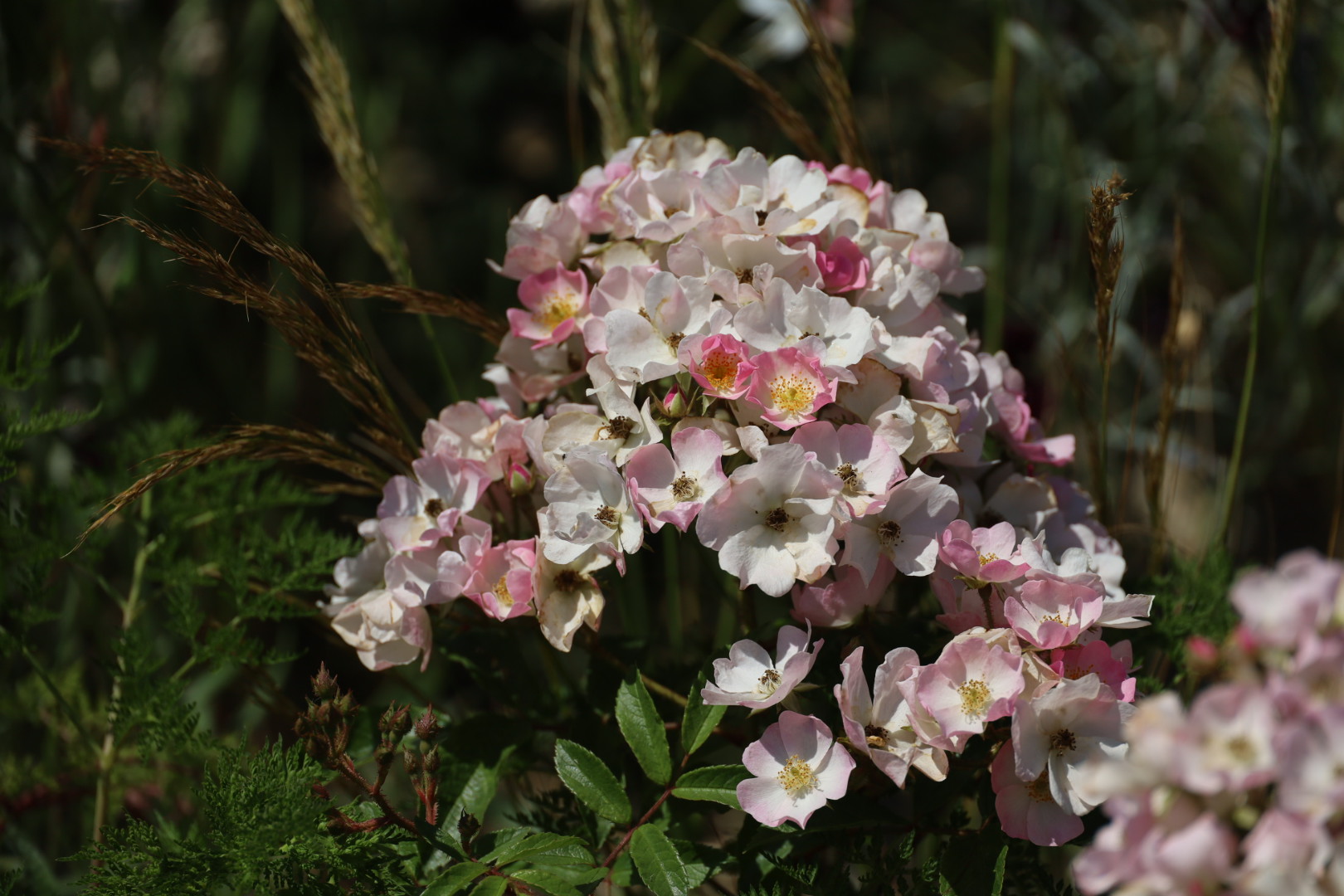
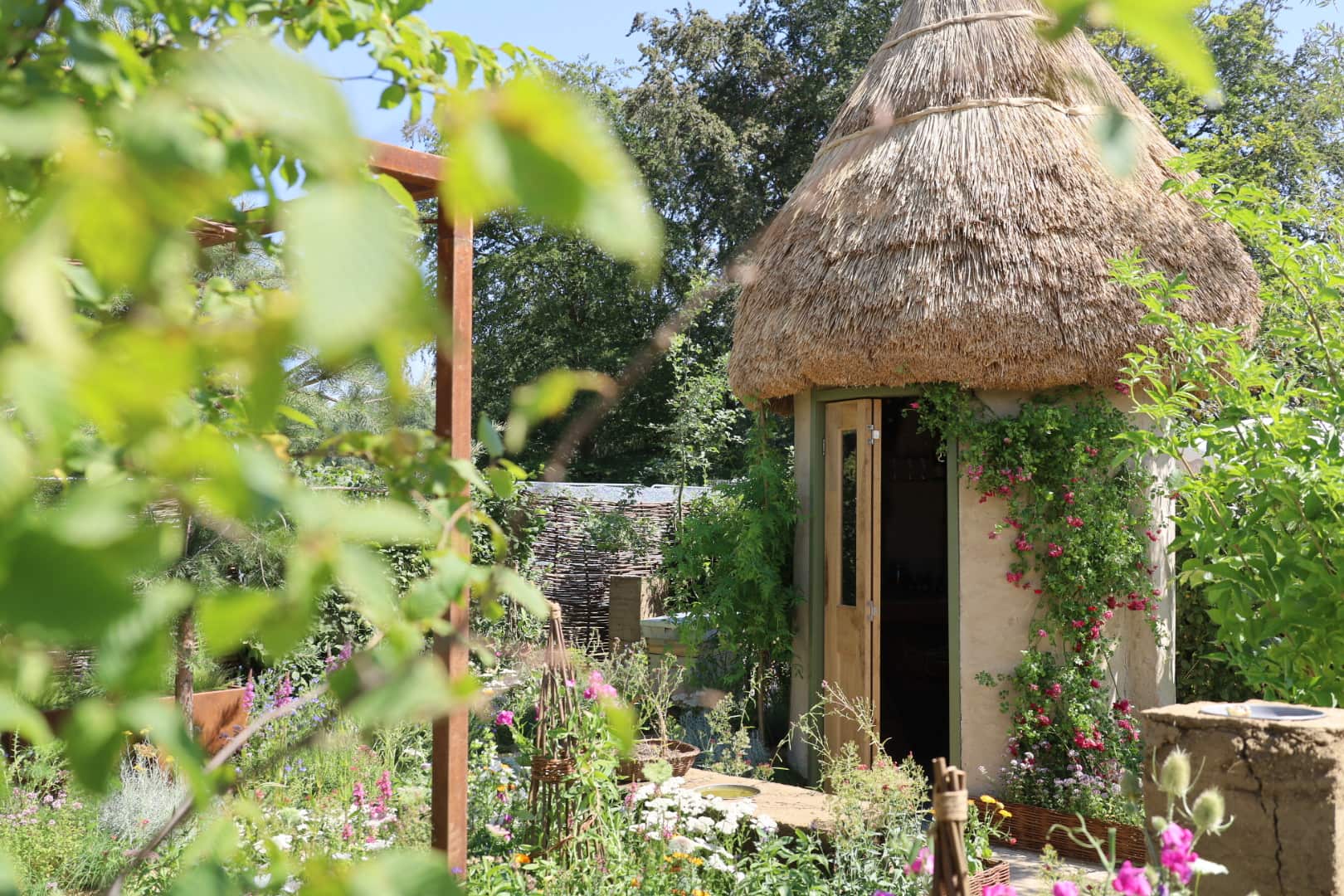
The Floral Marquee
The Floral Marquee was a delight, though it carried an odd double burden. With Hampton Court now biennial, Badminton effectively absorbed its role for 2026, and the dedicated rose marquee that Hampton Court usually offers was folded into the general floral tent. It was a compromise, and it showed.
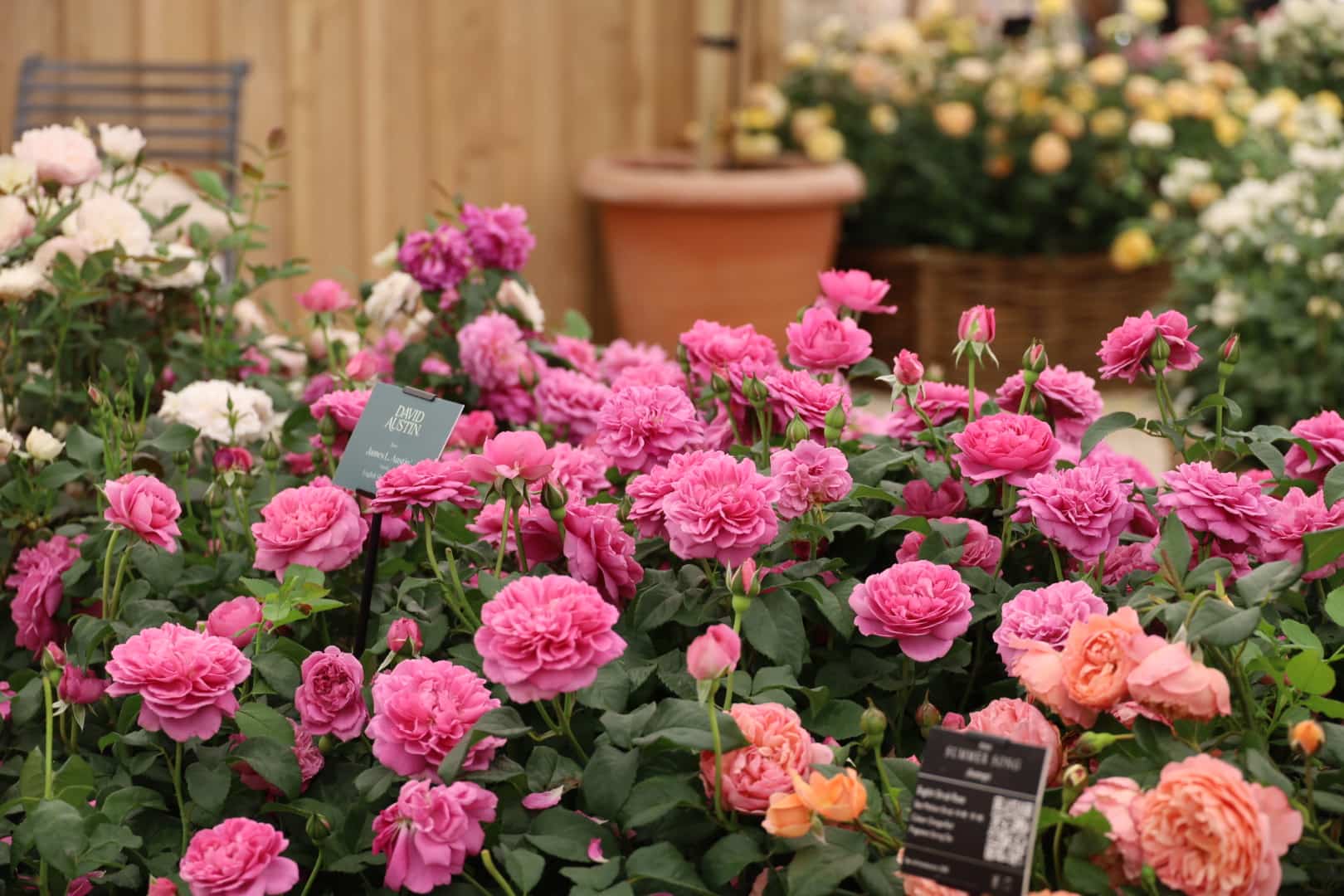
Even so, more than 70 exhibitors gathered here, including strong rose displays from both David Austin Roses and Peter Beales Roses, alongside four Plant Heritage exhibits and five nurseries making their RHS debut. For anyone who loves English shrub roses, having two of the country's most respected breeders in one space was a treat.
The David Austin stand was almost overwhelming, in the best way. Among the roses I managed to note were Sir David Beckham, Dannahue, Penelope Lively, Boscobel, Queen of Sweden, Lady of Shalott, Emma Bridgewater, Summer Song, Eustacia Vye, Ballerina, Princess Anne, The King's Rose, Mary Delany, Kew Gardens, The Lark Ascending, and James L. Austin. There were surely more, but the heat, the crowds, and the sheer number of blooms in every corner got the better of my memory.
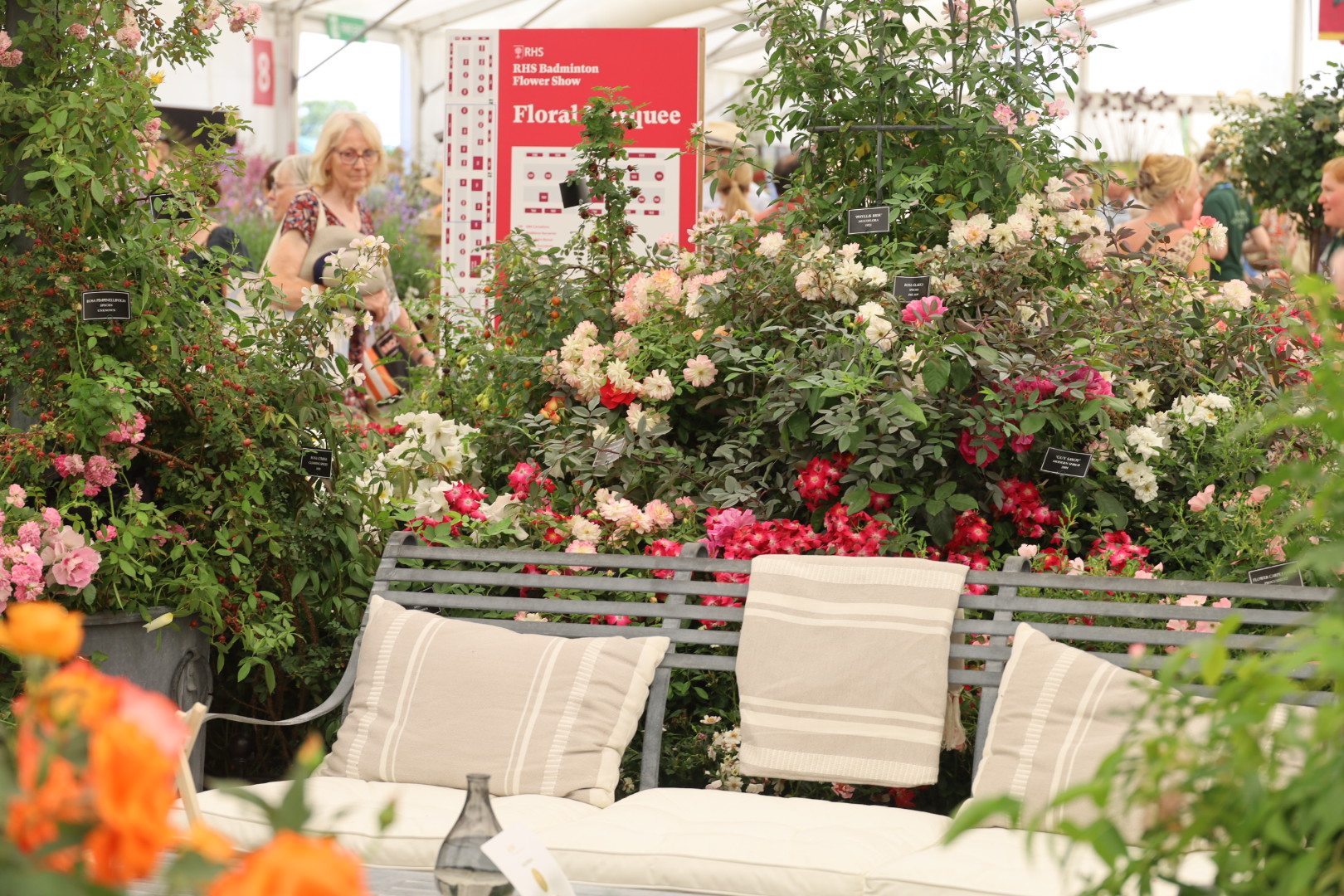
David Austin Roses
What stayed with me was the white Sir David Beckham rose, launched at Chelsea earlier in 2026, placed as the centrepiece beside a black fountain. The dark water threw the pure white bloom into lovely relief. I also remember a cute trained dog whose owner kindly had it perform a few tricks for me in front of the David Austin rose display, and the metal statues of women who looked as though they had stepped straight out of a Jane Austen novel, quietly elegant among the roses.
.jpg)
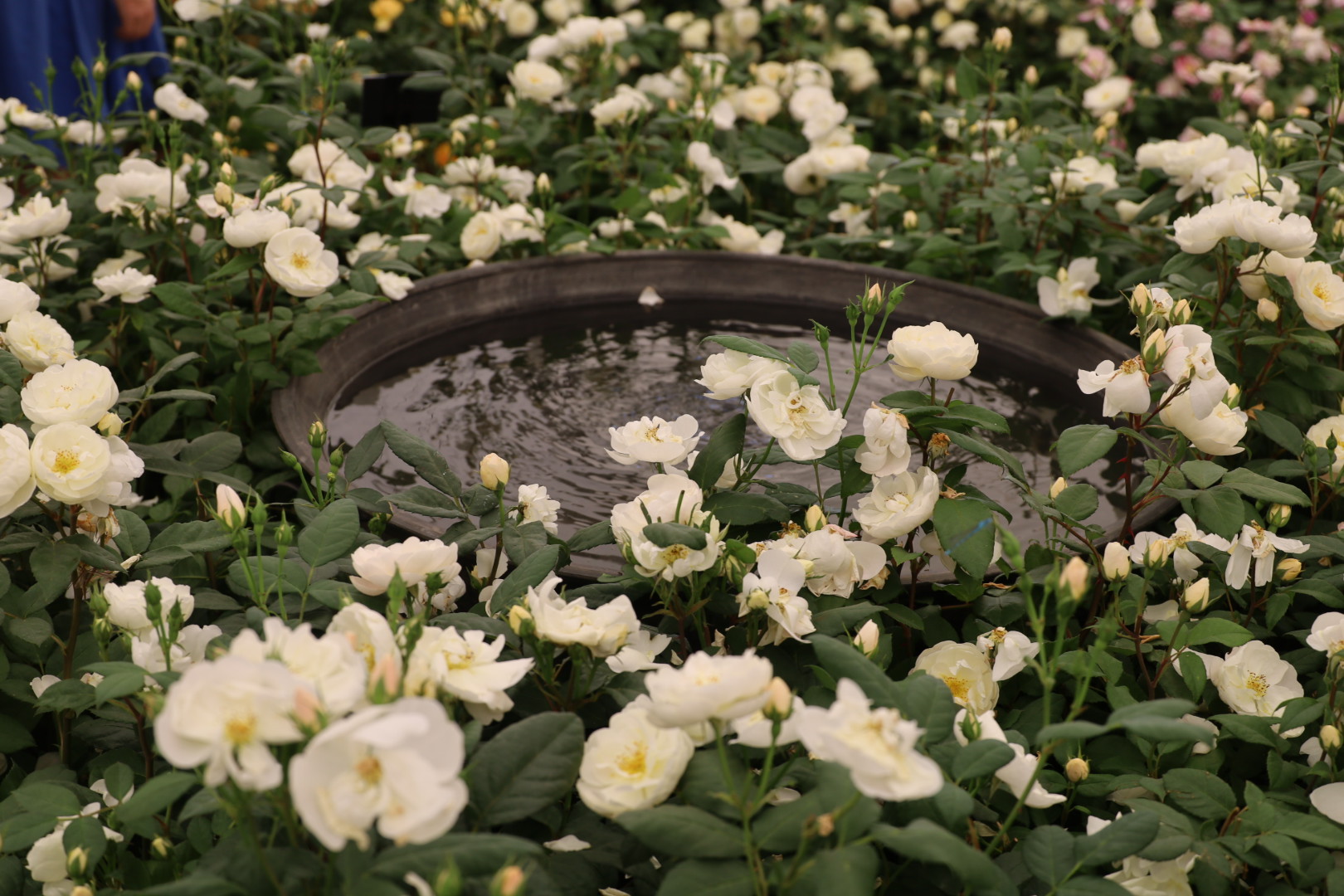
.jpg)
I will be candid about one thing. There was no usable phone signal on any major UK network, and the RHS offered no guest WiFi, which made looking up unfamiliar David Austin varieties genuinely difficult. With the printed catalogue missing several of the roses on show, I was left admiring a gorgeous fan-shaped rose catalogue on the stand that I badly wanted to buy, and could not, because it was not for sale.
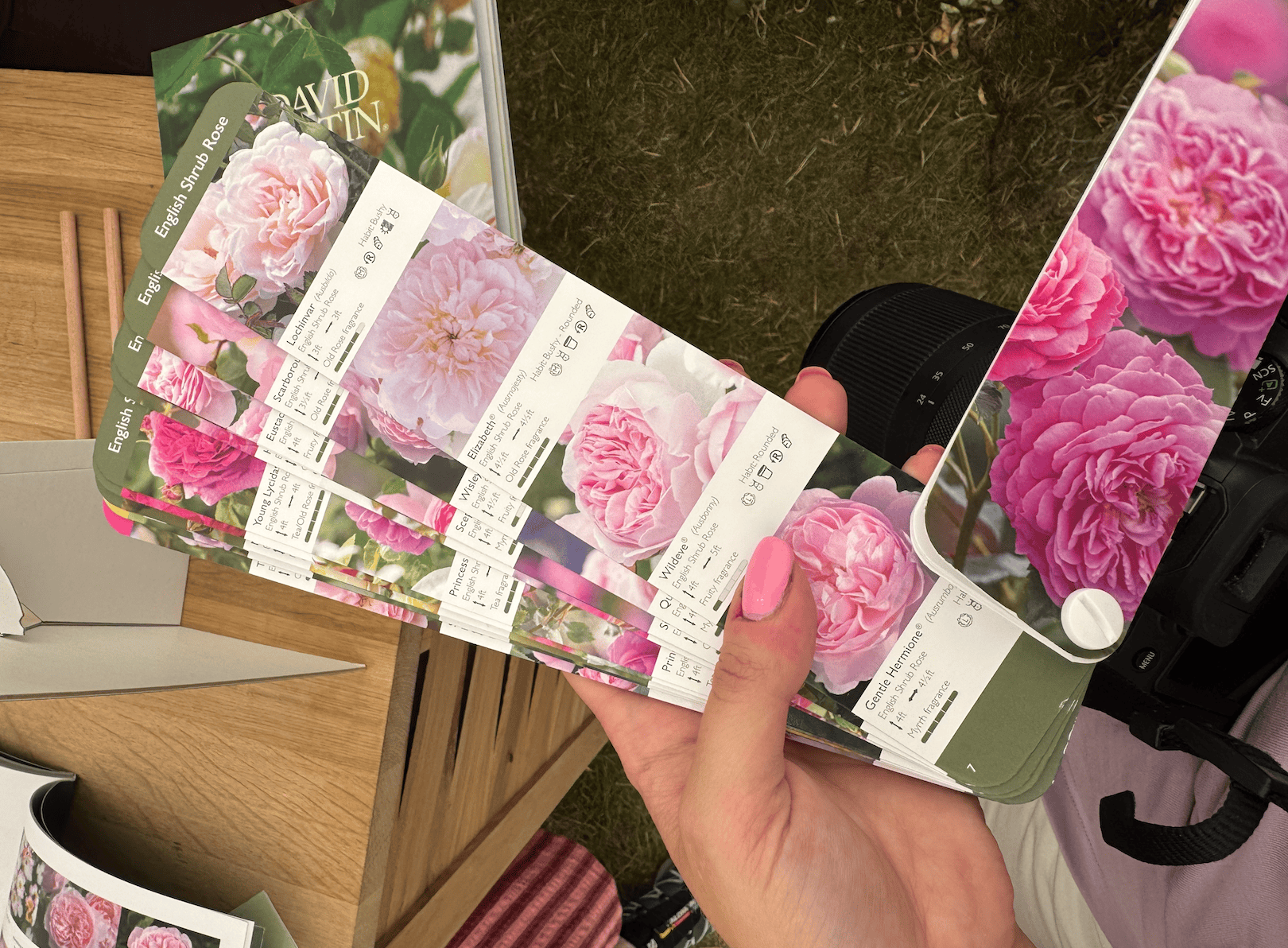
Peter Beales Roses
The Peter Beales display followed the same language the nursery used at Chelsea earlier in the season, an English country garden style built on dense, layered planting rather than sparse, architectural staging. You walked through arches heavy with climbers and ramblers, past borders packed tight with everything from historic species roses to brand-new 2026 introductions. It had that lush, generous, grandmother's garden character the nursery is known for, and it was a joy to move through.
.jpg)
Blue Diamond's surprise rose garden
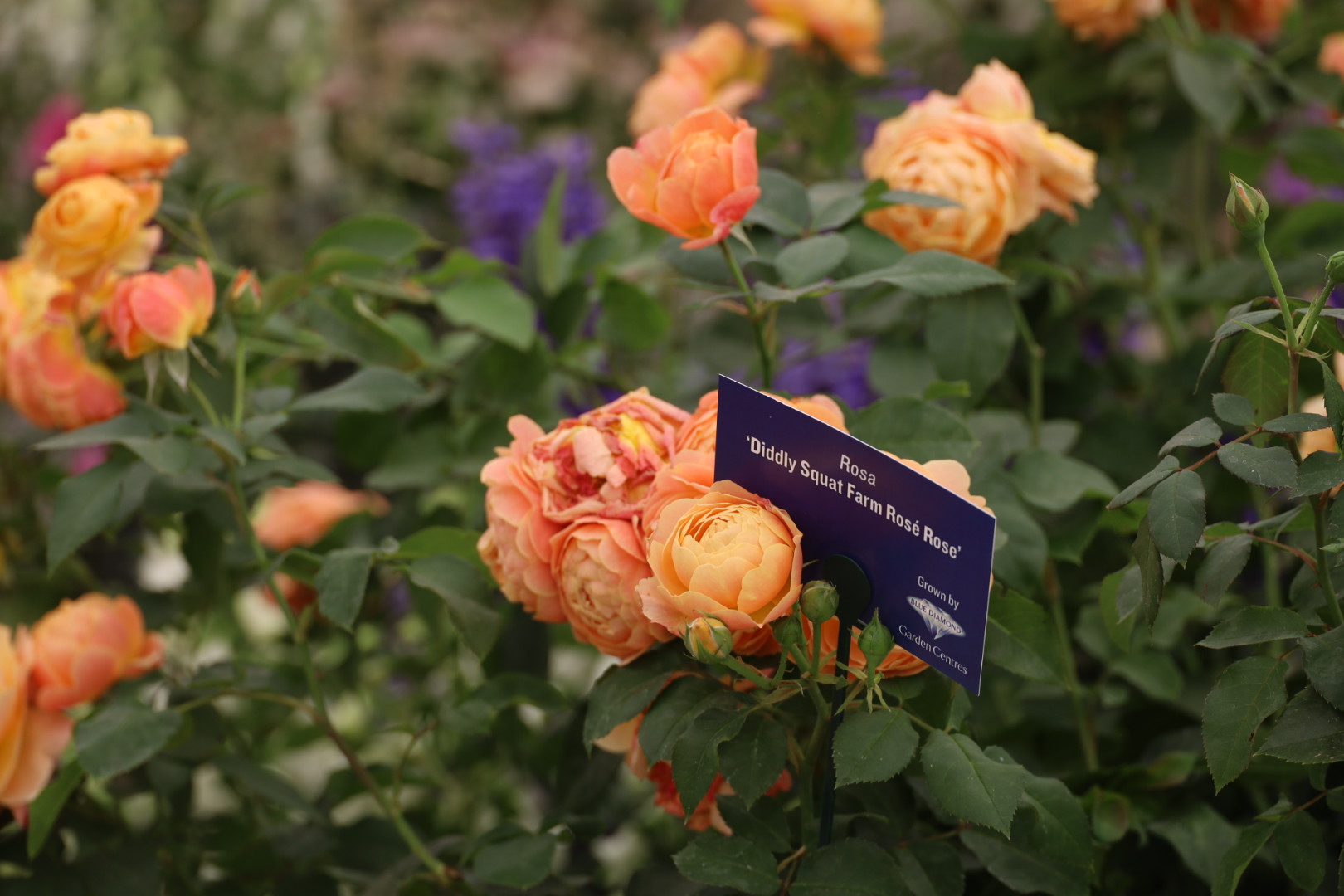
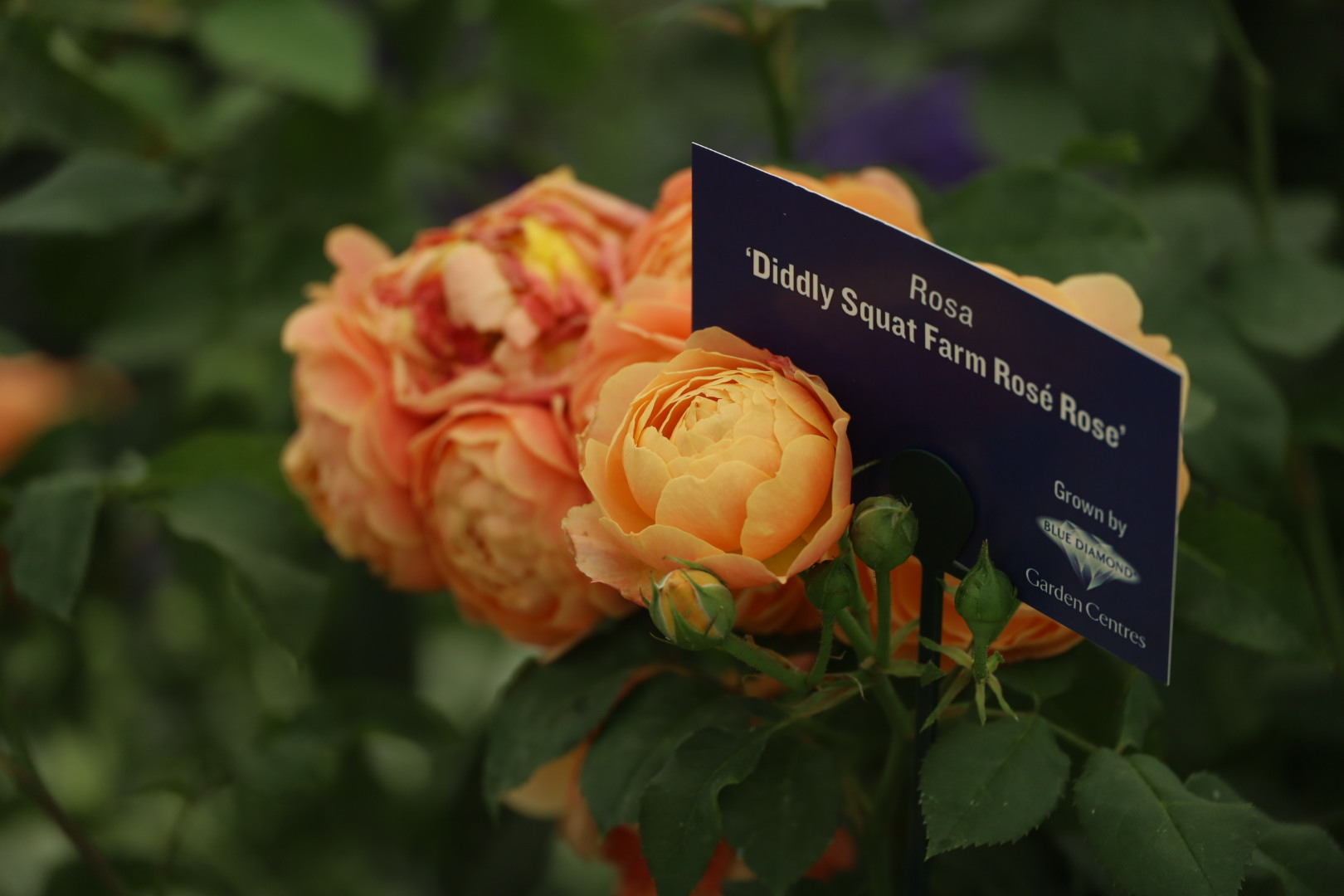
The Blue Diamond garden centre display held one of the pleasant surprises of the marquee. Its Diddly Squat Farm Rose Rose looked remarkably lush given the conditions that had worn down so many others. Three roses featured here: a small yellow bush, a large peach climber, and the healthy Diddly Squat Farm Rose Rose itself. Rather than rigid, over-manicured beds, the roses were woven into a soft, romantic cottage and meadow planting.
The peach climber, rising up a wooden frame with big generous blooms, was clearly the centrepiece and one of the best rose moments in the whole marquee. The small yellow bush sat more hidden, with no tag. And here again, the same frustration. There was almost no information online about the winning gardens, the RHS website listed no rose names, and the garden centre did not answer visitors' questions on Instagram. So the names of those two roses will stay a small mystery.
A hot debut, and a resilient oneBadminton's first outing was not perfect. It could have used more roses, more shade, working phone signal, and far better plant labelling for those of us who care about names. But it delivered real beauty in punishing conditions, and it introduced a promising new date to the calendar. Most of all, it reminded me why I love these plants. In a week that tested everyone, human and horticultural alike, the roses held their heads up and kept flowering. That is resilience, and it is worth celebrating.

