

The Rose Garden at Cambridge University Botanic Garden (CUBG) is one of the most intellectually distinctive rose gardens in Britain. Unlike the purely ornamental displays of a municipal park or the formal grandeur of a stately home parterre, this garden is a living narrative - a botanical argument made in flowers, hips, and foliage. Planted in 1980–81 to celebrate the 150th anniversary of the University acquiring its current site in 1831, the garden was designed by one of the twentieth century's greatest plantsmen, Graham Stuart Thomas, to make visible the findings of a pioneering geneticist, Dr Charles Chamberlain Hurst, who spent over two decades at Cambridge unravelling the ancestry of the cultivated rose. The result is a space that is simultaneously beautiful, ecologically rich, and scientifically rigorous - a garden where every bed tells a story about evolution, hybridisation, and the long human love affair with Rosa.
Part One: The Garden in Context - A Brief History of CUBG
The Origins: A Physic Garden in the City
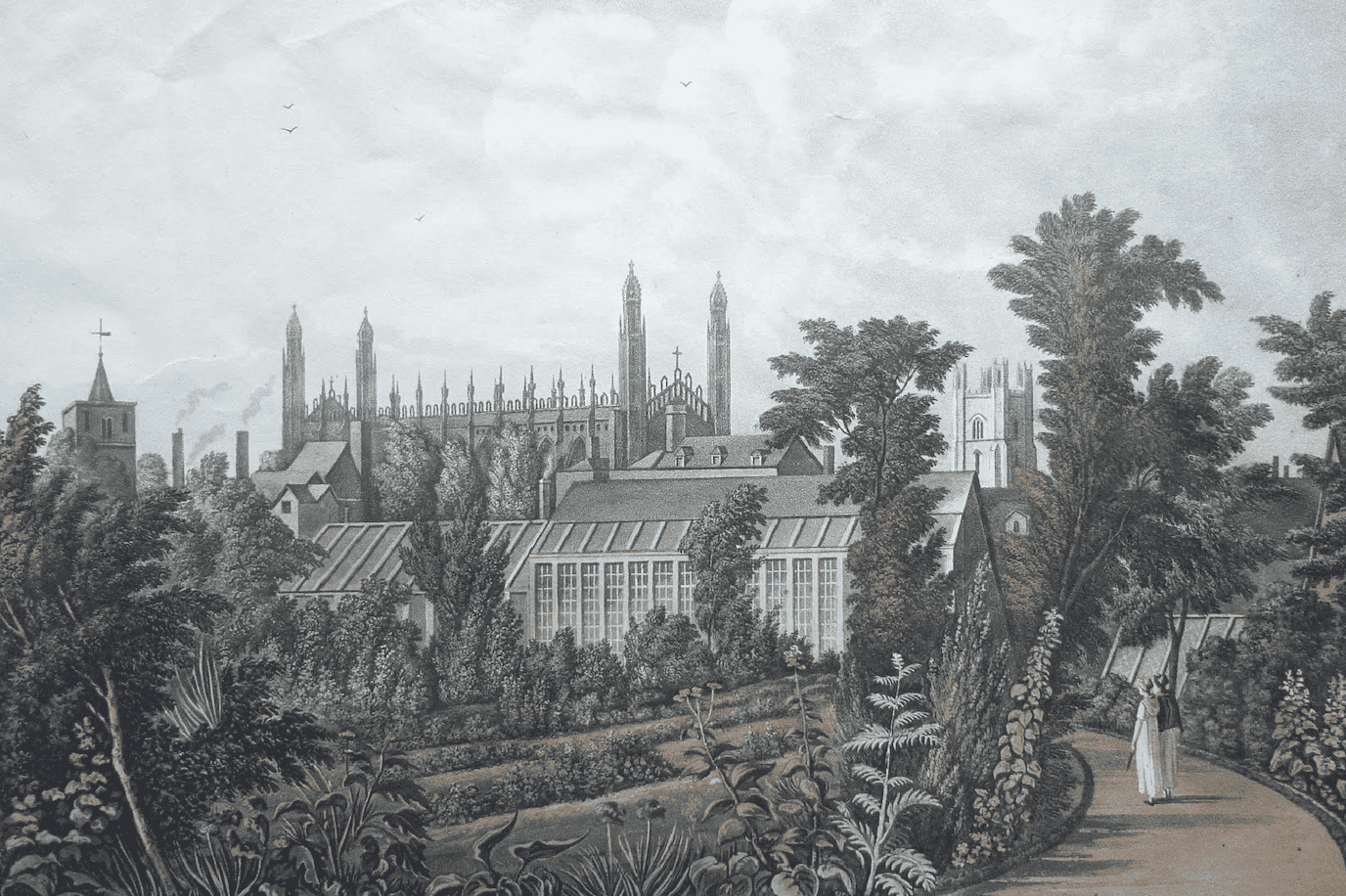
The story of the Cambridge University Botanic Garden stretches back to 1762, when Dr Richard Walker, Vice-Master of Trinity College, purchased a piece of land in the heart of Cambridge, the former garden of the Austin Friars, for £1,600. This original site, now known as the New Museums Site, was established as a Physic Garden, laid out in four quadrants and used primarily to teach medical students about medicinal plants. A lecture room provided instruction in "the plant virtues for the benefit of mankind," and was also used by the Professor of Chemistry. Useful, but cramped - by the early nineteenth century, the limitations were unmistakable.
Henslow, Darwin, and the Move to Trumpington Road
The transformation of CUBG from a small drug-plant nursery into a world-class institution is almost entirely the achievement of one man: John Stevens Henslow, appointed Regius Professor of Botany in 1825 at just twenty-nine years of age. Henslow found the original garden "utterly unsuitable for the demands of modern science" and believed passionately that a botanic garden should facilitate teaching and research about plants as organisms worthy of study in their own right - not merely as medicines to be dispensed. His vision was radical for its time.
After years of lobbying, a 38-acre site (16 hectares) of cornfield, one mile south of the city centre on Trumpington Road, was acquired by the University from Trinity Hall in 1831. Legal disputes prevented immediate development, but planting finally began in 1846 when the then Vice-Chancellor planted a lime tree (Tilia x europaea) to mark the occasion. Henslow's most famous student, Charles Darwin, had been inspired by his professor's teaching to join the voyage of HMS Beagle. And Darwin's botanical specimens from that voyage are still held in the Cambridge University Herbarium to this day.
Andrew Murray, the Garden's first Curator, was appointed from the Liverpool Botanic Gardens in 1845 and drew up plans in consultation with Henslow. Murray's design was in the "Gardenesque" style of the period: a sinuous path following the circumference of the garden, bisected along an east–west axis by a Main Walk of majestic conifers, with a U-shaped lake to the north and a complex series of herbaceous systematic beds to the south. This plan remains largely legible today in CUBG's Grade II heritage landscape.
The Eastern Expansion: The Cory Legacy
For nearly a century, only the western half of the original 38-acre site was developed. The eastern 20 acres remained largely undeveloped until an extraordinary act of generosity by Reginald Radcliffe Cory (1871–1934), a Trinity College student who became one of the Garden's most significant benefactors. Cory was the son of a Welsh coal-mining millionaire and developed a lifelong passion for plants and gardens during his time at Cambridge. He funded the construction of Cory Lodge - the Director's residence, built in 1924–25 - and, on his death in 1934, bequeathed the balance of his considerable estate to the Botanic Garden. Due to legal complexities, the Cory Fund only became available after World War II, from the 1950s onwards. It was this bequest that enabled the development of the eastern half of the Garden, the construction of the Cory Laboratories and glasshouses in 1957, and the creation of the many specialist gardens that CUBG is celebrated for today.
The eastern gardens, developed from 1951 under Director John Gilmour and Garden Superintendent Bob Younger, were informed by the twentieth-century science of ecology rather than the Victorian preoccupation with taxonomic classification. The Rose Garden , completed in 1980–81, sitting between the eastern and western halves - embodies both traditions, fusing the systematic thinking of the Victorians with the genetic science of the twentieth century.
Part Two: The Intellectual Engine - Charles Chamberlain Hurst and the Science of the Rose
A Geneticist Among the Roses
To understand the Cambridge Rose Garden, one must first understand the man whose research inspired its design. Charles Chamberlain Hurst (1870–1947) was an English geneticist of uncommon breadth and tenacity. From 1922 to 1947, he was based at Cambridge University Botanic Garden, where he undertook a systematic investigation into the genetics of the cultivated rose - work that would take him a quarter of a century to complete.
Before Hurst, the complex genealogy of garden roses was essentially a mystery. Gardeners and breeders had for centuries been crossing species and selecting offspring, producing roses of astonishing variety, but the underlying genetics - the family tree that connected a modern Hybrid Tea to an ancient Gallica or a Chinese species - was entirely uncharted. The origin of our modern garden roses, as the CUBG website states, "was a mystery until the twentieth century".
Chromosomes, Crossings, and the Scheme of Rose Evolution
Hurst's method was methodical and bold. He approached the problem through cytology - the study of chromosomes - and through controlled crossing of species, examining the genetics and chromosomal makeup of the resulting hybrids. By painstakingly crossing rose species from different parts of the world and studying the characteristics passed on to the offspring, he began to construct a theoretical framework for rose evolution.
Hurst proposed a scheme of rose evolution that attempted to trace the descent of all major rose classes from a relatively small number of foundational wild species. His framework identified how Chinese roses, with their remarkable ability to flower repeatedly through the season, had been introduced into European horticulture in the late eighteenth century, eventually hybridising with the ancient European species: the Gallicas, Damasks, and Albas, to produce the complex race of modern roses we know today. His work, which was only fully published after his death, was included by Graham Stuart Thomas in his landmark 1955 publication The Old Shrub Roses, helping to bring Hurst's findings to a wide horticultural audience.
The Cambridge Roses: Hurst's Horticultural Legacy
The most tangible and fragrant legacy of Hurst's scientific work is the small group of hybrid roses he raised at Cambridge as by-products of his experimental crossings. These are known as the "Cantab Plants" - specimens that either originated in the Garden or were named in its honour. Three of Hurst's rose hybrids are of particular significance:
- Rosa × cantabrigiensis is arguably the most celebrated and visually beautiful of the three. It arose from a cross between Rosa sericea and Rosa hugonis and produces primrose-yellow blooms on arching, graceful stems from May to June. It is a robust, disease-free plant that grows to approximately 2 metres and thrives even on poor or chalky soils - a useful quality in Cambridge's challenging horticultural conditions. Raised around 1931, it received the RHS Award of Garden Merit in 1994 and is one of the most widely grown of all Cambridge-originating plants.
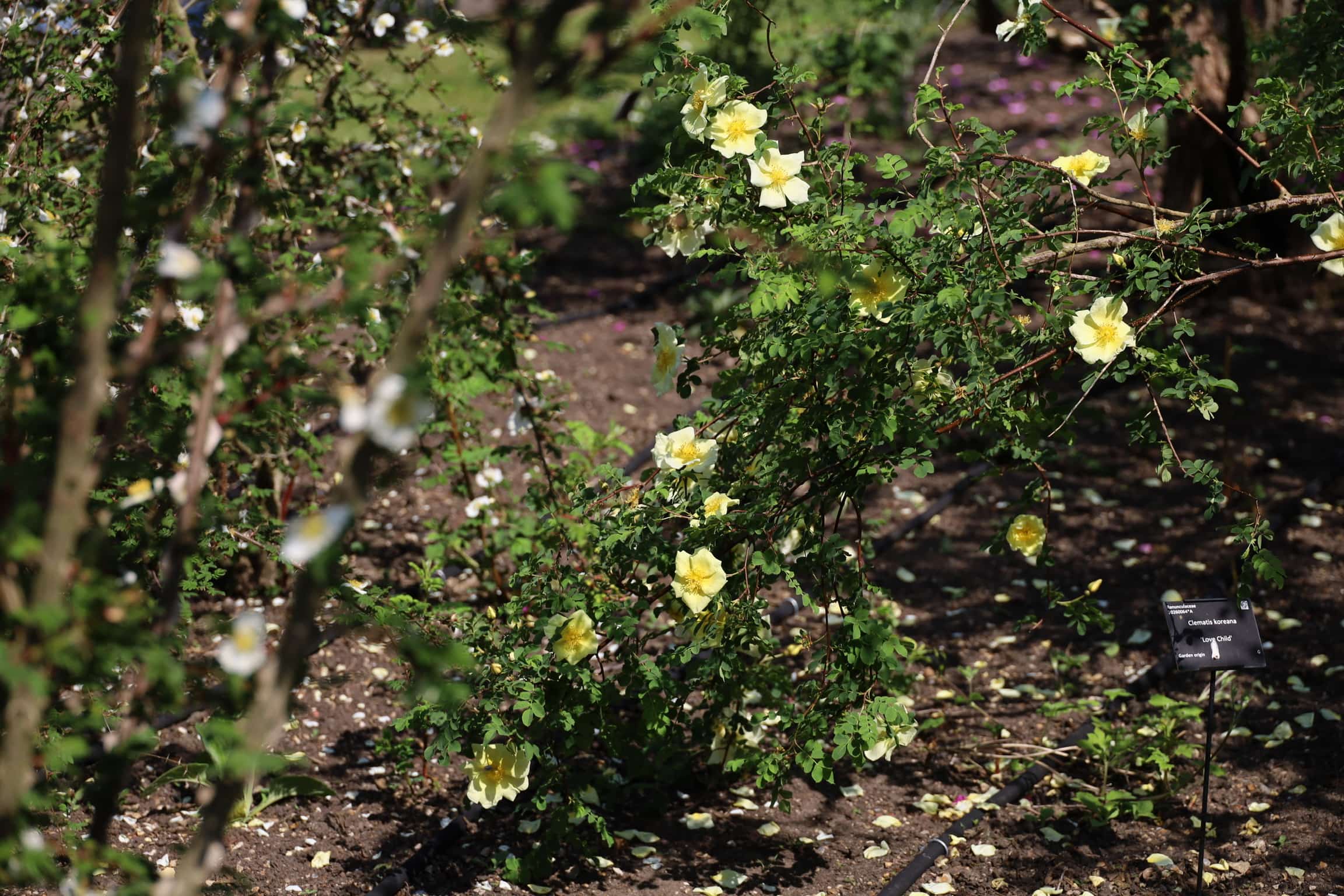
- Rosa 'Cantab' is the second Cambridge rose, a single pink hybrid of great beauty raised in 1927 from a cross of Rosa nutkana and 'Red Letter Day'. More rarely seen than its yellow sibling, it produces large single blooms described as being of great beauty, though it has been something of a neglected rose in wider cultivation. The plant can be seen in the Rose Garden today.

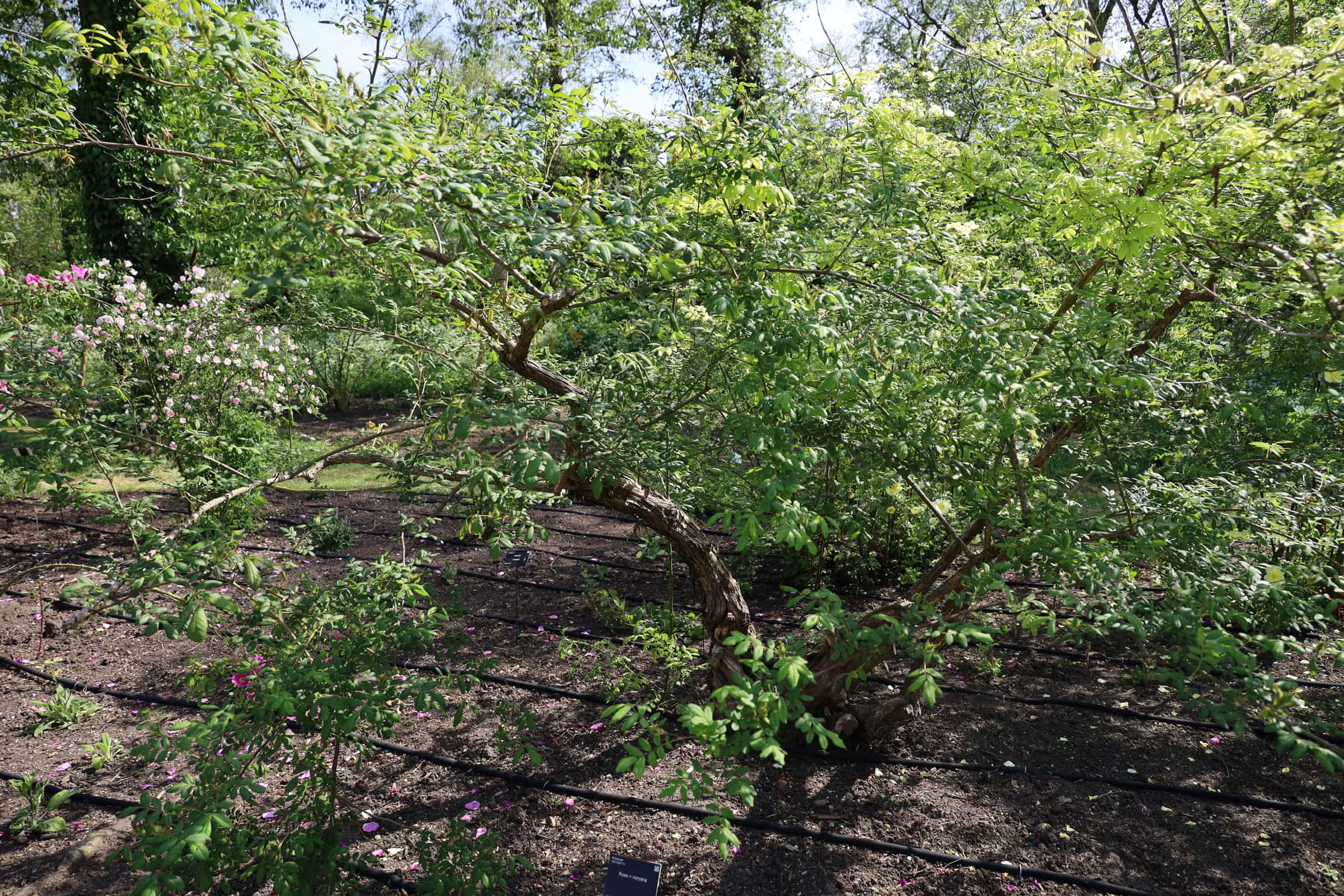
- Rosa × coryana completes the trio. This large shrub , growing to 2.5 metres in height by 2 metres in width, was raised from a cross of Rosa roxburghii and Rosa macrophylla. In early summer it produces large, open blooms of deep pink with a prominent central boss of yellow stamens. Once the heavily veined leaflets have been shed in autumn, pendent, bristly hips are revealed, adding interest through the winter months. The name coryana honours Reginald Cory, the Garden's great benefactor, linking this Cambridge rose to the philanthropist who made so much of the modern garden possible.
Part Three: The Design - Graham Stuart Thomas and the Art of Botanical Narrative
The Architect of the Garden
If Hurst provided the intellectual framework, Graham Stuart Thomas OBE VMH (1909–2003) provided the aesthetic vision that transformed scientific theory into a garden of extraordinary beauty. Thomas is a towering figure in twentieth-century horticulture - a plantsman, designer, illustrator, and writer who was once described as "the greatest gardener ever". Born in Cambridge in 1909 into a family of keen amateur gardeners and musicians, Thomas joined Cambridge University Botanic Garden as a trainee at the age of seventeen, attending university lectures on horticulture and botany and gaining the practical and theoretical knowledge that would form the foundation of his career.
It was during this early period at CUBG that Thomas first worked on a design project for the rose garden there - a connection to Cambridge that would come full circle decades later when he was commissioned to design the current garden to mark the 150th anniversary of the University's acquisition of the site. By the time that commission arrived, Thomas was among the most celebrated rose authorities in the world.

Thomas's Career and the Old Rose Revival
After leaving Cambridge, Thomas spent time at the Six Hills Nursery in Stevenage, then became foreman at T. Hilling & Co, a renowned 300-acre nursery near Chobham, Surrey. It was at Hilling's that he met the formidable garden designer Gertrude Jekyll, then aged eighty-eight, who became a mentor and passed on her theories of garden design as an art form. Inspired by Jekyll's approach, Thomas began collecting old shrub and climbing rose varieties (Gallicas, Damasks, Albas, Centifolias, Moss roses) many of which had fallen completely out of fashion because they flowered only once per season.
He promoted these old roses for their "grace, scent and flower form at a time when floribundas and hybrid teas were popular, both for their continuous flowering and bold colours". His 1955 publication The Old Shrub Roses became one of the most popular gardening books ever written, constantly reprinted and credited with catalysing a widespread revival of interest in historic rose varieties. Thomas subsequently authored Shrub Roses of Today (1962) and Climbing Roses Old and New (1965) - together these three volumes effectively wrote the canon for the appreciation of old garden roses in Britain.
From 1955 to 1973, Thomas served as Gardens Adviser to the National Trust, during which time he worked on more than one hundred gardens, including Sissinghurst, Mount Stewart, and Hidcote. His masterpiece (the creation he himself described as such) was the rose garden at Mottisfont Abbey, Hampshire, where he housed his private collection of old roses within the walls of the former kitchen garden. Today, Mottisfont holds the National Collection of Historic Roses and attracts around 84,000 visitors during the flowering season.
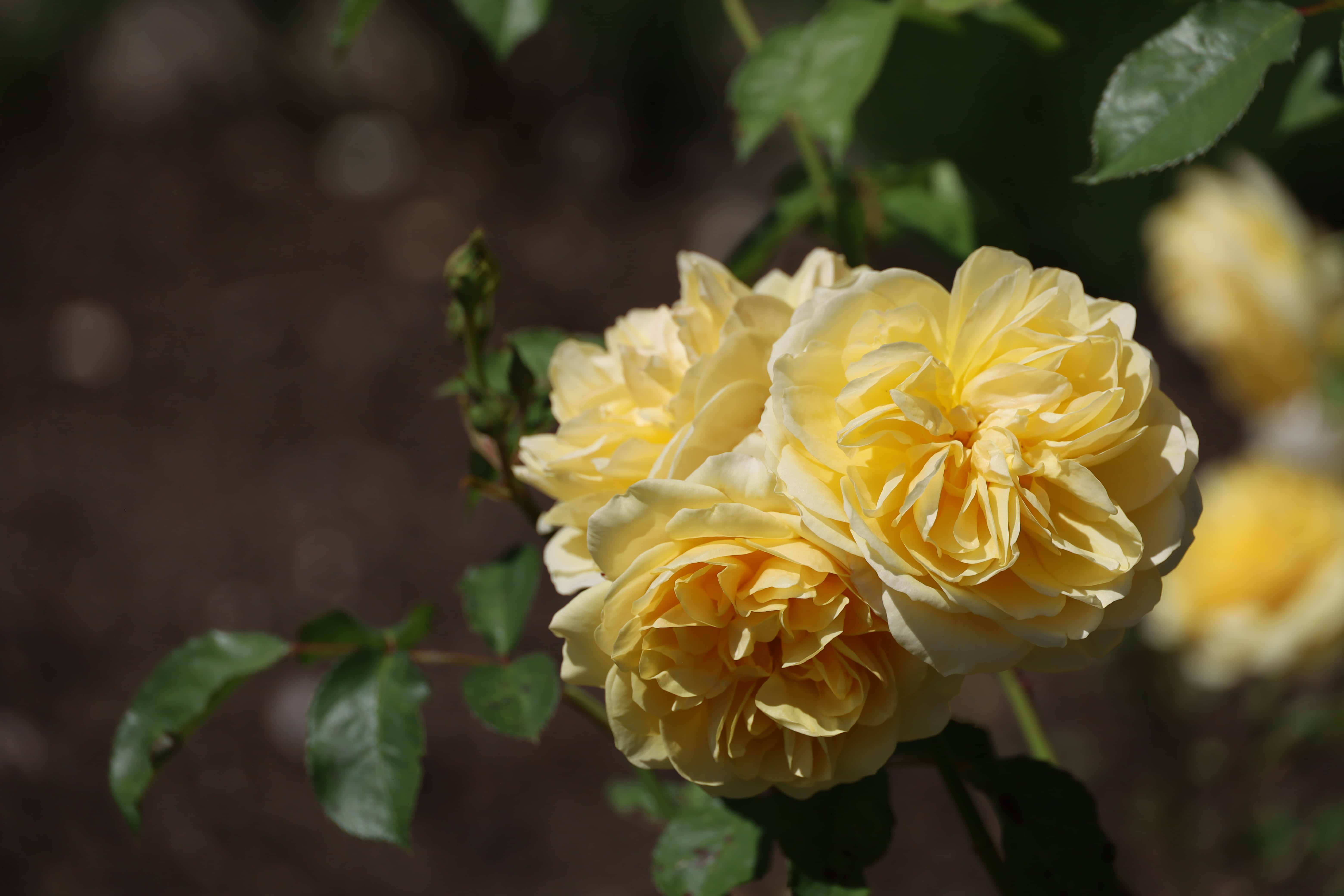
He is immortalised in plant names: the vigorous honeysuckle Lonicera periclymenum 'Graham Thomas' and perhaps most fittingly the deeply golden David Austin shrub rose 'Graham Thomas', introduced in 1983 and named after him as one of the iconic English roses of the twentieth century.
The Design Concept: Evolution Made Visible
Thomas's design for the Cambridge Rose Garden is not simply beautiful it is didactic. The layout directly translates Hurst's genetic research into a physical, walkable narrative of rose evolution. This is its defining characteristic and what sets it apart from virtually any other rose garden in Britain.
The garden straddles the South Walk, with distinct planting zones on either side of this central axis:
The South Side: Species Roses and Primary Hybrids
The southern portion of the garden is given over to wild species and the primary hybrids arising directly between them. This is where the journey begins, among roses that are closest to their wild origins - the Gallicas, the Albas, the ancient species of China and Central Asia Rosa gallica 'Officinalis', the Apothecary's Rose, is among the most historically significant plants here. Grown in British gardens since the medieval period for its medicinal properties. it was the professional symbol of the apothecary and the Red Rose of Lancaster. It has semi-double, rosy-crimson flowers with prominent golden anthers and a fragrance of captivating richness. Growing here too is Rosa × alba 'Alba Maxima', an old variety closely related to the Jacobite White Rose of York, whose double flowers carry a cream-peach blush and are produced in profusion in summer on a vigorous shrub tolerant of poor soils and partial shade.
The North Side: Radiating Beds and the Story of Hybridisation
The north side of the South Walk features radiating island beds that tell the story of how new species crossed with traditional European varieties to produce the complex genealogy of the modern garden rose. Here the beds trace the influence of China roses, Damasks, and Bourbons - illustrating precisely what Hurst mapped genetically. The China roses, brought to Europe in the late eighteenth century, contributed the revolutionary trait of repeat-flowering; crossed with European Gallicas and Damasks, they produced Portlands and Bourbons; these in turn gave rise to Hybrid Perpetuals, and eventually to the Hybrid Teas that dominated twentieth-century gardens. Thomas's radiating beds make this lineage spatially comprehensible in a way that no chart or textbook could achieve.
Among the most striking plants in the northern beds is Rosa 'Golden Wings', a large, spreading shrub growing to 2 metres that produces clusters of large, single, pale yellow flowers of strong, sweet fragrance throughout summer, followed by persistent orange hips well into winter. Raised in the United States in 1956 by Roy Shepherd, it is "relatively untroubled by pests and diseases" - a quality much appreciated in the challenging Cambridge conditions.
The Heart of the Garden: Yew-Enclosed Benches
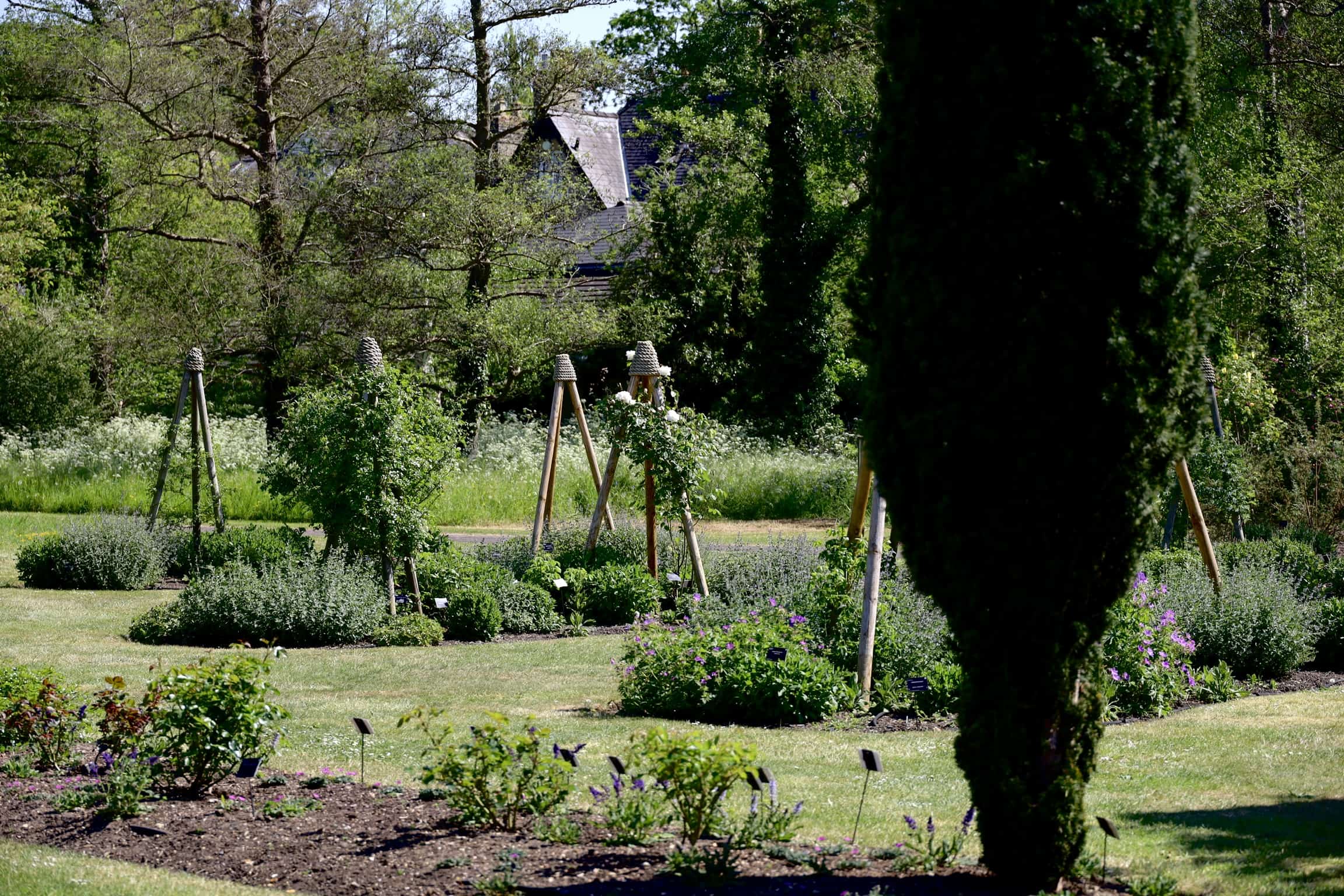
At the centre of the rose garden sit two back-to-back benches enclosed within yew - a contemplative focal point that offers "scent-infused vantage points over the history of the garden rose". This small enclosure, where the fragrance of the surrounding roses concentrates in still air, is among the most memorable spots in the whole of CUBG. It is a place to sit and allow the garden's layered story to settle - the science made sensory.
Part Four: The Plants - A Rose Lover's Guide to the Collection
The Foundation: Ancient Species
The species roses in the southern beds represent the genetic foundation from which all garden roses ultimately descend. Rosa gallica, native to southern and central Europe eastwards to Turkey and the Caucasus, is acknowledged as one of the oldest cultivated roses, its genes found in virtually all modern garden varieties. The Apothecary's Rose, R. gallica 'Officinalis', known since at least 1310, was cultivated on an enormous scale in medieval France, notably at Provins, where its highly fragrant petals were used to make medicines, cosmetics, and perfumes. The distinctive Rosa 'Mundi' (R. gallica 'Versicolor'), a sport of 'Officinalis' with semi-double flowers in crimson-pink striped and splashed with white, has been known since the sixteenth century and carries one of the most charming legends in all of rose lore: it is said to have been named after "Fair Rosamund", the favourite of King Henry II.
Old European Roses: Damasks, Albas, and Centifolias
The Damask roses, heavily scented and with a slightly lax habit, are thought to have been brought back to Europe from the Middle East by the Crusaders, possibly named after the city of Damascus. They remain one of the principal sources of rose oil for the perfume industry and their presence in the Cambridge beds links the garden to millennia of human fascination with rose fragrance. The Albas, of which Rosa × alba 'Alba Maxima' in the Cambridge collection is a supreme example, can form large shrubs up to two metres and are distinguished by their soft blue-grey foliage and pale flowers ranging from pure white to soft pink.
The Cantab Hybrids: Cambridge's Own Roses
The three Hurst hybrids described above - Rosa × cantabrigiensis, Rosa 'Cantab', and Rosa × coryana - are botanically the most significant plants in the garden, being specimens that were raised on this very site as part of original scientific research. Their presence in the collection is not merely sentimental; they are living evidence of the hybridisation experiments that gave this garden its intellectual raison d'être. Rosa × cantabrigiensis in particular has spread into wider cultivation and can now be found in gardens and nurseries across Britain and beyond.

The Transition to Modern Roses
The radiating northern beds move through the historical sequence: from Bourbons (which first appeared on the Île de Bourbon, now Réunion, as a natural cross between the Autumn Damask and a China rose) to Hybrid Perpetuals, and eventually to the Hybrid Teas whose rise in the twentieth century briefly eclipsed the old roses that Thomas and others fought to preserve. The 1970s saw the development of the Hybrid Teas that became popular for their neat habit and suitability for small gardens; their inclusion in the beds gives visitors a visible endpoint to the evolutionary narrative.
More recent additions reflect the work of modern breeders in synthesising old-rose charm with contemporary vigour. English roses such as 'Desdemona' and 'Lady of Shalott' - David Austin introductions that combine the full, fragrant flowers of old roses with the repeat-flowering and disease resistance of modern breeding - represent the current frontier of rose development. Rosa × pteragonis 'Cantabrigiensis' is cited by CUBG's Head of Horticulture, Sally Petitt, as one of the best roses for beginners: disease-free, requiring little pruning, and producing its pale-yellow flowers reliably on arching stems to about 2 metres.
Part Five: The Planting Palette — Companions, Ecology, and Seasonal Interest
The Cottage Garden Underplanting
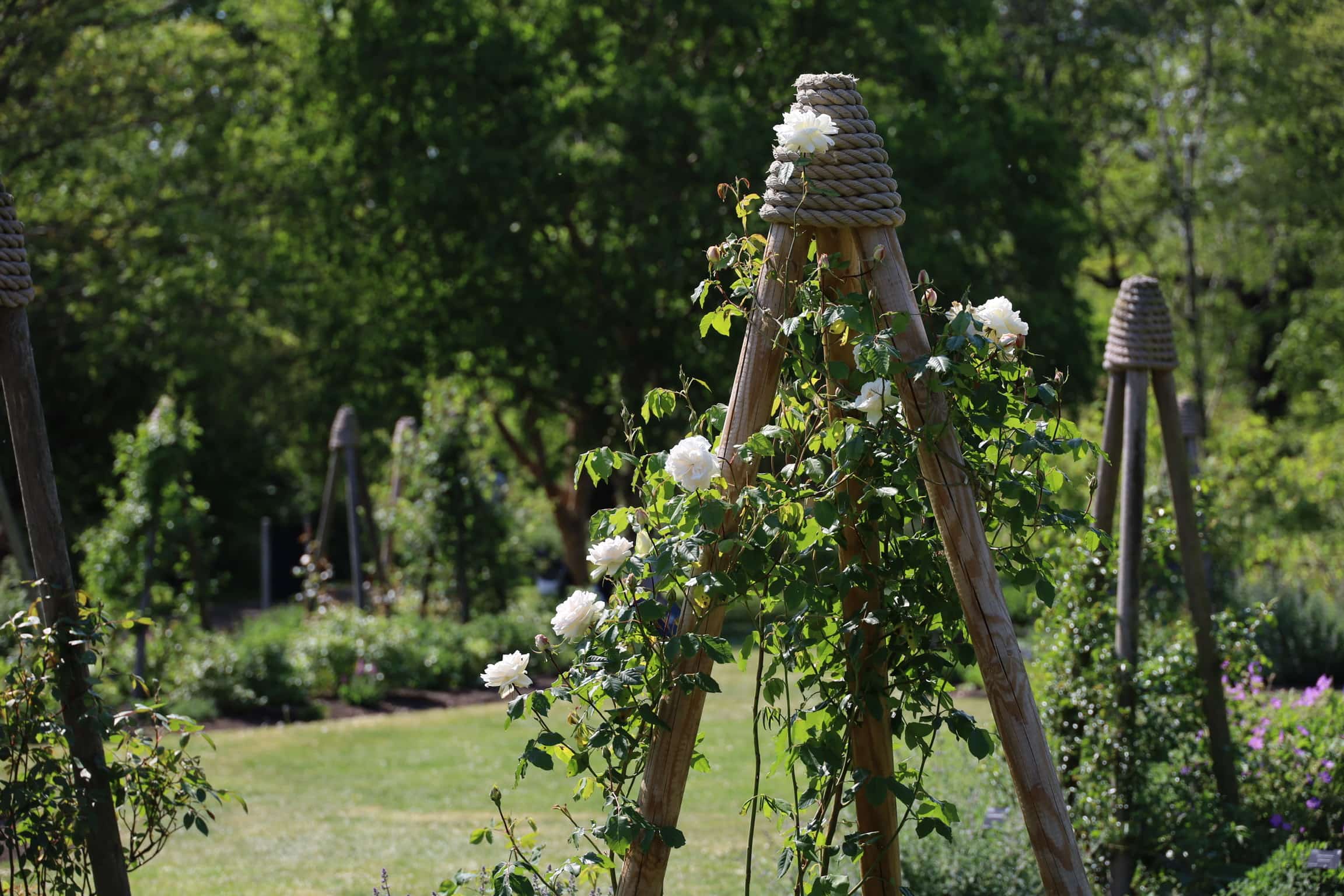
Thomas's planting philosophy at Cambridge follows the same principles he developed at Mottisfont: roses should not exist in sterile isolation but should be interplanted with herbaceous companions that extend the season of interest, soften the composition, and create a naturalistic garden atmosphere. At Cambridge, this means a classic underplanting of lavenders and hardy geraniums (Geranium species), with catmint (Nepeta) and ornamental alliums (Allium) weaving between the rose beds in cottage-garden style.
This combination is ecologically as well as aesthetically motivated. Lavender repels aphids and encourages pollinators; catmint provides soft waves of blue-purple that harmonise with pink, crimson, and white roses; alliums, their structural spherical heads persisting long after flowering, add architectural interest as the roses are coming into bloom. The cumulative effect is a garden that is never without a layer of colour and texture, even in the gaps between rose flushes.
A Magnet for Wildlife
The combination of species roses (with their single, accessible flowers), old European varieties, and a carefully chosen underplanting makes the Cambridge Rose Garden an exceptionally productive habitat for pollinators. Bees are the primary beneficiaries: single and semi-double flowers expose their stamens and nectar directly to visiting insects, while the complex fragrances of old roses - often far richer and more varied than those of modern Hybrid Teas - draw pollinators from considerable distances. Butterflies, hoverflies, and many other insect species are drawn to the catmint, lavender, and geranium underplanting throughout the summer season.
As CUBG's own description eloquently notes: "Throughout the summer, the Rose Garden is a magnet not just for visitors but for a myriad bees and butterflies". The garden's value as a pollinator habitat is not incidental - it is a considered outcome of the planting choices made by Thomas and maintained by subsequent generations of CUBG horticulturalists.
Autumn and Winter Interest
One of the great distinctions between species roses and modern garden forms is the spectacular display of hips that many wild and primary hybrid roses produce after flowering. At Cambridge, this feature is specifically celebrated. Rosa × coryana produces its pendent, bristly hips after the deeply veined leaves fall, providing winter structure and colour. Rosa 'Golden Wings' bears persistent orange hips that remain well into winter. Rosa × alba 'Alba Maxima' produces oval-shaped hips in autumn, completing what is a full four-season contribution to the garden. The yew enclosures at the heart of the garden, evergreen throughout the year, give these autumn and winter qualities a composed framework.

Part Six: Horticultural Challenges and Management
The Problem of Cambridge's Chalky Soil
One of the most frank and instructive things that CUBG communicates about its Rose Garden is that it faces significant horticultural challenges. Cambridge sits on chalk-based, dry soil, with a pH typically above 7.1 - conditions that are far from ideal for many cultivated garden roses. Chalky soils are low in humus, drain rapidly, and can cause lime-induced chlorosis (yellowing between the veins) in acid-loving plants.
CUBG's response is characteristically practical: "The garden forms of roses do not grow particularly well in the chalky, dry soil of the Botanic Garden, so a really thick mulch is applied each autumn to enrich the soil and conserve moisture". This annual autumn mulching regime is essential to the health of the cultivated garden roses and is part of the horticultural management that keeps the collection viable. The silver lining is significant: "Many species and primary hybrids, however, flourish" - the wild and near-wild roses that form the southern half of the garden's layout are in many cases better adapted to poor, alkaline soils than their highly bred descendants, and perform exceptionally well in Cambridge conditions.
This biological reality gives the Cambridge Rose Garden an unintended educational dimension: the species and primary hybrids, which constitute Hurst's foundational material, naturally thrive, while the more complex modern varieties require active support. The garden is, in a sense, demonstrating by its own growing conditions which roses can fend for themselves and which require human intervention.
Pest and Disease Management
CUBG operates a policy of relying on "good horticultural practice and natural methods to control pests and diseases" outdoors. The Rose Garden's underplanting of lavender, catmint, and geranium supports beneficial insect populations that help to manage aphid pressure naturally. The choice of disease-resistant varieties - Rosa × cantabrigiensis is specifically described as "disease free", and 'Golden Wings' as "relatively untroubled by pests and diseases" - further reduces the need for intervention.

Part Seven: The Broader Story - Why This Garden Matters
Preservation of Heritage Varieties
The Cambridge Rose Garden exists within a wider context of concern about the loss of heritage rose varieties. Graham Stuart Thomas devoted much of his life to this cause: he spent "nearly forty years in search of rose varieties that had become very rare, and saved many from extinction". His successor gardeners, most notably at Mottisfont Abbey, continue this work. At Cambridge, the preservation of Hurst's three experimental hybrids - cantabrigiensis, 'Cantab', and coryana - ensures that the genetic and horticultural products of his Cambridge research survive in the very place they were created.
The rose is, as CUBG's Head of Horticulture Sally Petitt writes, the nation's favourite flower: there are today over 200 rose species and more than 30,000 cultivars, ranging from hybrid teas to ramblers, climbers, English roses, ground-cover varieties, and floribundas. Keeping the older end of this spectrum visible and accessible, growing the roses that preceded the modern breeding programmes, is an act of cultural as well as botanical preservation.
A Living Scientific Archive
What makes the Cambridge Rose Garden unique among British rose gardens is its relationship with scientific research. The garden is not a memorial to a past scientist's work - it is an ongoing demonstration of how plant science relates to the plants themselves. The scheme of rose evolution that Hurst proposed from his Cambridge research has been refined and updated by subsequent work (including molecular phylogenetics, which has brought new precision to questions Hurst could only approach chromosomally), but the fundamental insight - that modern garden roses are the product of complex hybridisation between wild species from different continents, and that the history of that hybridisation can be read in the garden's layout - remains as valid and compelling as it was when the garden was planted.
Visitors walking south to north through the Cambridge Rose Garden are, in the most literal sense, walking through evolutionary time: from wild species and primary hybrids to the complex multi-ancestry modern forms; from once-flowering Chinese and European ancestors to the repeat-flowering wonders of contemporary breeding.
The Thomas Connection: A Homecoming
There is a particular poignancy to Graham Stuart Thomas having designed the Cambridge Rose Garden. He began his horticultural career at CUBG as a seventeen-year-old trainee, attending lectures and working alongside Charles Hurst, the very geneticist whose research the garden commemorates. When, decades later, Thomas was commissioned to design the garden that would make Hurst's work visible in planting form, it was a homecoming of the most fitting kind: the student of science become the master of art, working in the garden where both had learned their craft.
Thomas's legacy at Cambridge is part of a larger continuum. His books: The Old Shrub Roses(1955), Shrub Roses of Today (1962), Climbing Roses Old and New (1965) remain essential reading for anyone serious about old garden roses. His work at Mottisfont Abbey preserved hundreds of varieties that might otherwise have been lost. And at Cambridge, his design gave permanent, beautiful form to one of the most significant scientific contributions to our understanding of the rose.

Part Eight: Visiting the Rose Garden
When to Visit
The Rose Garden is at its peak from late May through to July, when the bulk of the species and old European roses are in bloom. June is widely regarded as the finest month, when once-flowering Gallicas, Damasks, and Albas are open simultaneously and the air in and around the yew benches is thick with complex fragrance. Modern and repeat-flowering varieties extend the season into September and beyond. Autumn brings the spectacular hip display of the species roses in crimson, orange, and scarlet colours that makes a late September or October visit well worthwhile.
The garden is open every day throughout the year, with seasonal variations in closing times: April to September, 10am to 6pm; October and February to March, 10am to 5pm; November to January, 10am to 4pm. Standard adult admission is currently £9.50, with free entry for children under sixteen and Cambridge University students. The Garden is located at 1 Brookside, Cambridge CB2 1JE, approximately fifteen minutes' walk from the city centre and a short walk from Cambridge railway station.
Situating the Rose Garden in the Wider Garden
The Rose Garden lies on the South Walk, which forms one of the main axes of the garden's layout. Visitors arriving via the main Brookside entrance will find their way to it by following signage through the systematic beds or by bearing south from the lake and main fountain. The garden forms part of a rich horticultural neighbourhood: the Scented Garden, Winter Garden, and the historic Systematic Beds are all nearby, and the full glasshouse range (containing tropical, arid, and alpine collections) lies towards the northern boundary.
CUBG's Head of Horticulture selects weekly "Plant Picks" throughout summer, which frequently include rose garden highlights, and guided Garden tours run regularly during summer months. For the dedicated rose lover, a morning spent in the Rose Garden, followed by a visit to the Systematic Beds to understand the botanical families from which Rosa emerged, makes for one of the most intellectually satisfying horticultural experiences in Britain.
Key Facts at a Glance

