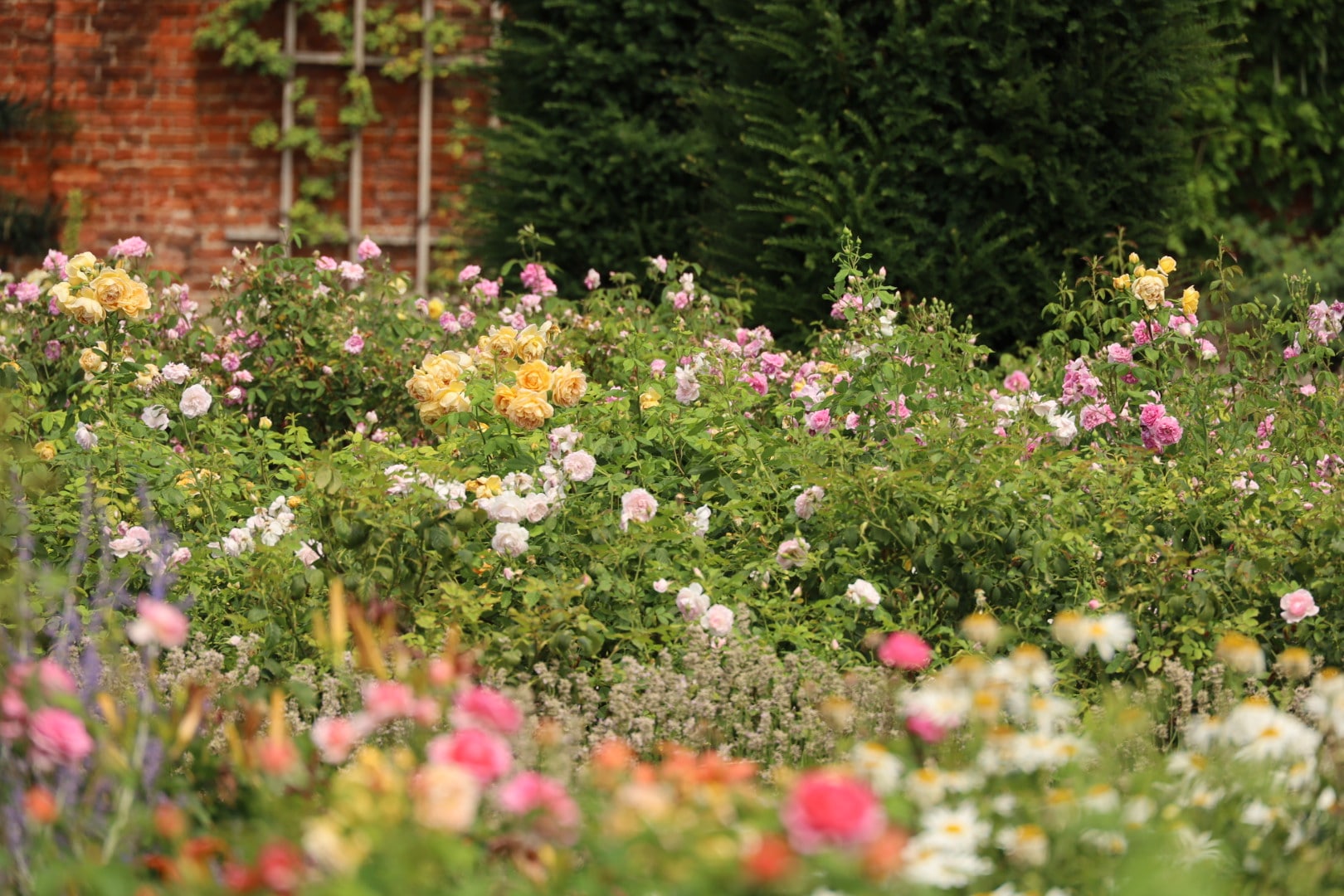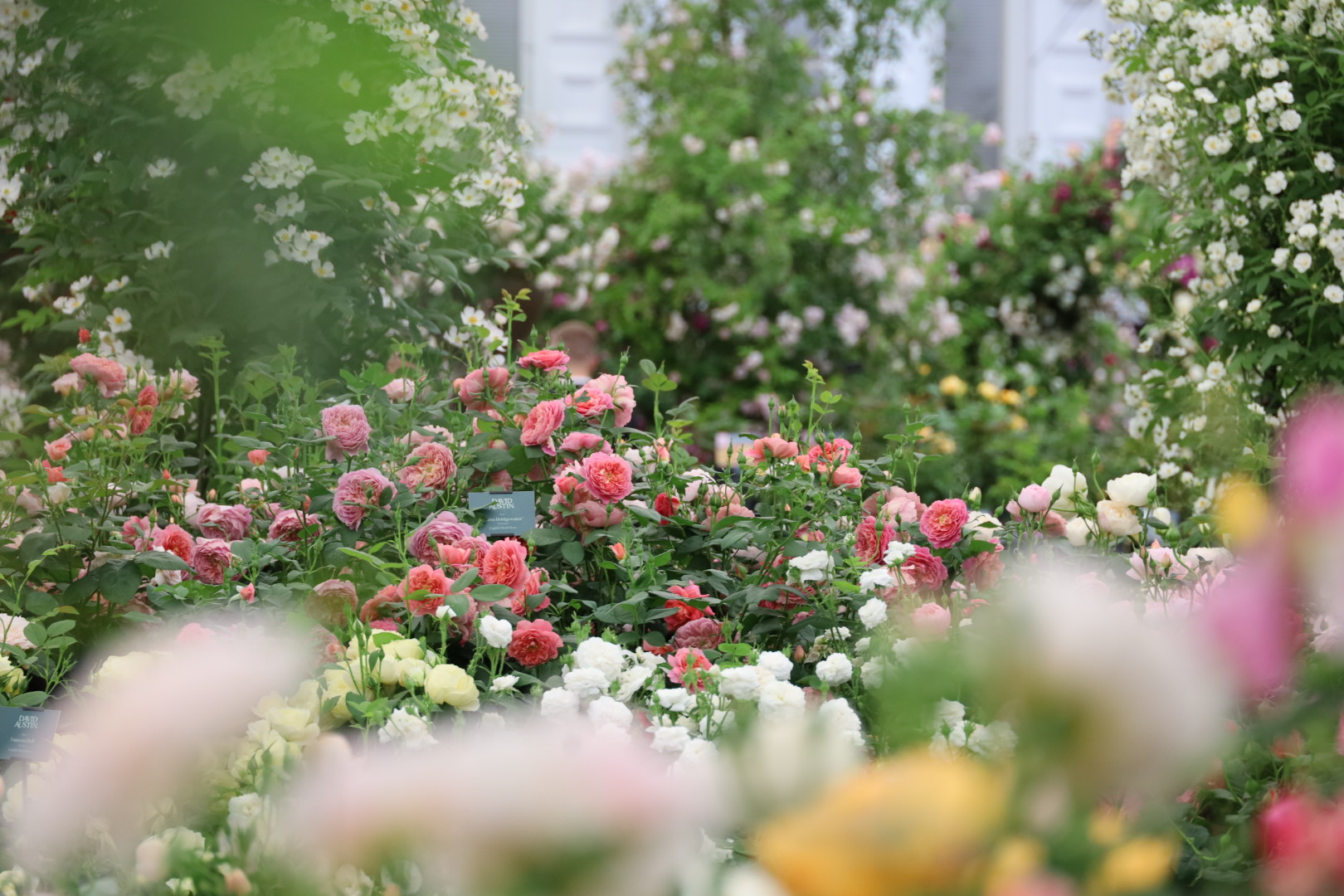
There is a trick to Chelsea, and if you have been coming to the show for any number of years you already know it. You arrive early. Not politely early, but embarrassingly, slightly-frantic early, camera bag already sorted the night before, shoes chosen for long standing on stone floors. This year I was through the gates just after eight in the morning, and I went straight for the Grand Pavilion. The crowds that would later make the whole thing feel like a busy Saturday market were still a distant threat. For now, the main hall was quiet, warm, and absolutely saturated with the scent of roses. It is one of the most genuinely pleasurable experiences I know.
I am going to tell you about the three displays that stopped me in my tracks, kept me rooted to the spot, and filled several memory cards before I had even thought about breakfast.
David Austin: The Cotswold Garden
The David Austin stand is always, for me, the emotional centre of Chelsea. I know that sounds dramatic, but after years of visiting I have come to accept it as simple fact. Walking into their display is not like looking at an exhibit. It is more like stepping through a gate into somewhere you half-remember, somewhere that feels quietly like home.
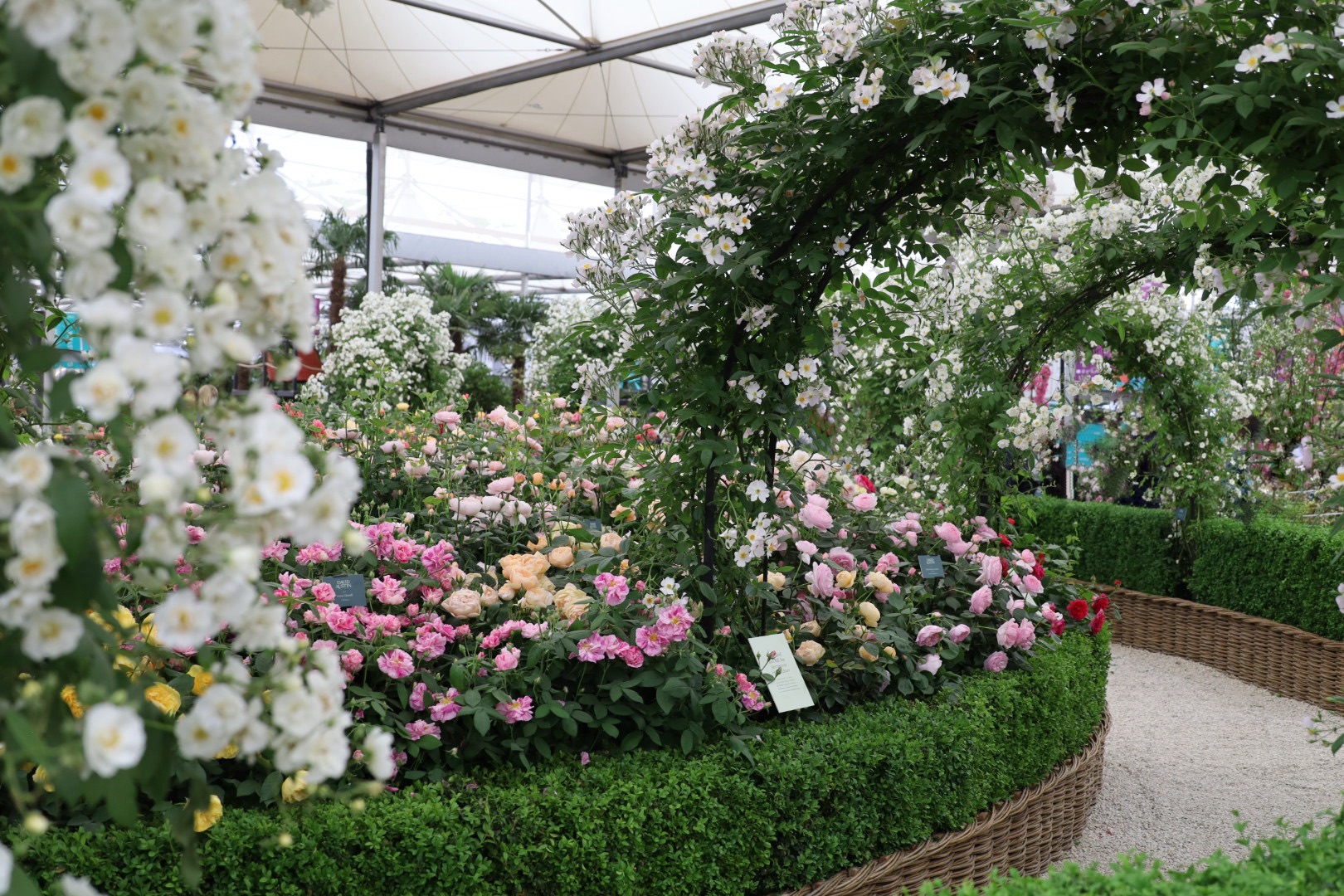
This year the concept was called The Cotswold Garden, and they have leaned into it beautifully. The design is circular in shape, anchored at its heart by a curving run of dry Cotswold stone wall in that particular warm honey tone you find on old farmhouses in the Windrush valley. A gravel path draws you straight toward a pair of iron gates at the centre of the wall, the metalwork inspired by the iconic gates at Wollerton Old Hall in Shropshire, with roses spilling over the stonework on either side. Hand-woven willow borders the planting beds along the path, keeping everything grounded and organic. Beyond the gates, rose arches sweep around the outer curve of the garden, framing the far half of the circle in a canopy of climbing blooms. It is the kind of garden design that does not shout at you. It simply draws you in through that gate and then refuses to let you leave.
At this hour, with almost nobody else around, the fragrance was extraordinary. David Austin have always understood that smell is not a bonus feature, it is the whole point. Their scent gallery this year allowed visitors to move through distinct fragrance pockets, each rose variety marked up with its perfume character. As a watercolour painter who also works with botanical subjects, I found myself mentally cataloguing colours and forms as much as scents. The soft peachy tones of Queen of Sweden next to the cool lilac of Emily Brontë. The warm, almost cupped bloom of Gabriel Oak. The airy, loose-petalled Lark Ascending with its particular quality of looking like it might dissolve into the air at any moment.
I spent the better part of an hour on this stand almost alone. The photography was a genuine pleasure in the morning light, the stone walls providing exactly the kind of warm neutral backdrop that makes rose colour sing in photographs without competing with it.
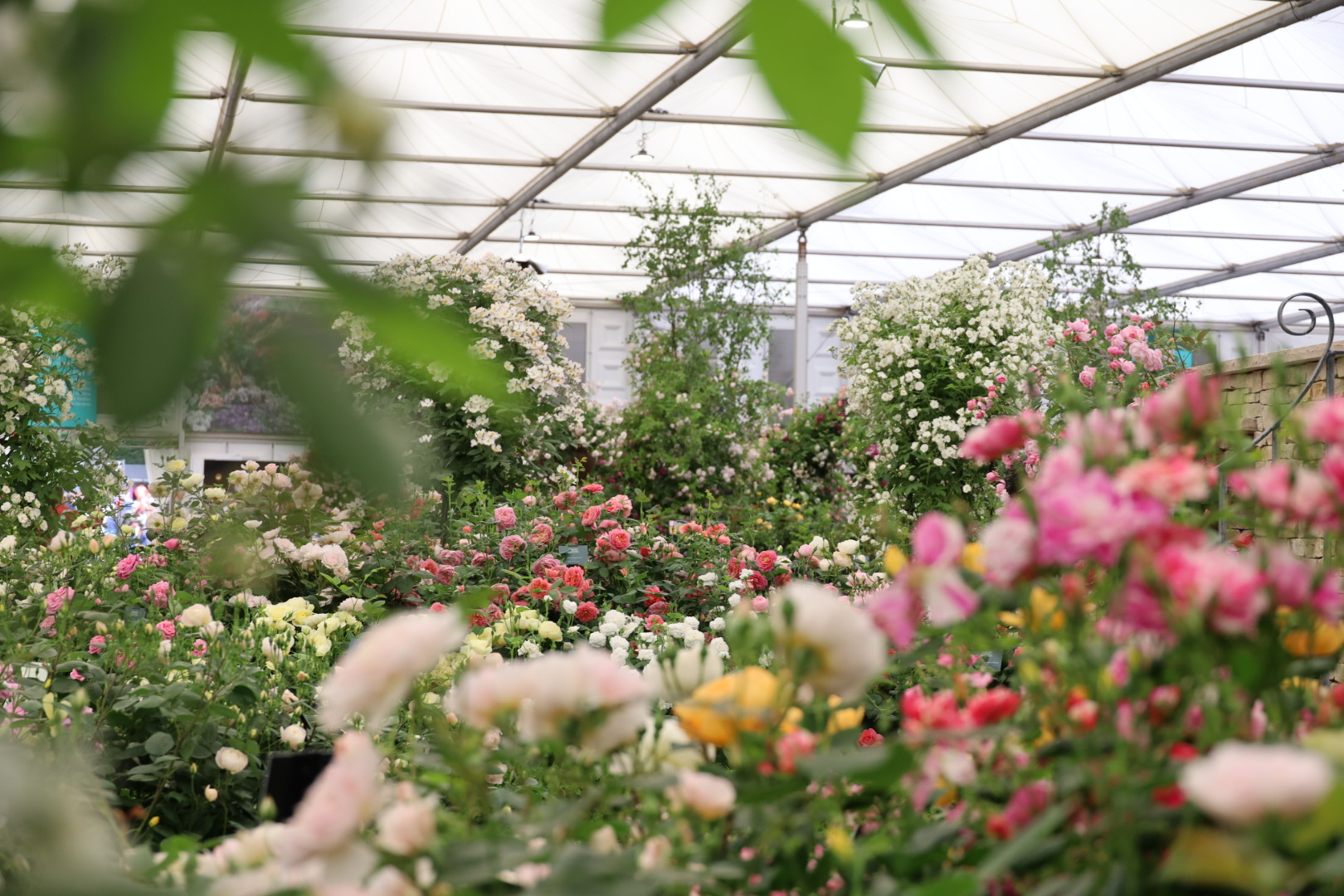
The headline new introduction was Sir David Beckham (Ausa34b16), a clean white rose positioned at the entrance as the centrepiece. It is a handsome thing, around twenty-five petals, more structured than the usual David Austin silhouette. Honestly it did not personally catch my heart the way some of their other roses do. There is something about their traditional old English rose form, that full, deeply quartered bloom that nods to a kind of pre-Raphaelite abundance, that I always return to. The Beckham rose is more contemporary in spirit, well-suited for certain garden schemes, but perhaps not quite the rose I would be reaching for. That said, I can absolutely see the appeal for anyone who wants something cleaner and more modern in a white.
The King's Rose was also prominently featured, and the whole display was organised with the kind of colour intelligence you expect from David Austin: roses of different hues living together in harmony because somebody understood the underlying relationships between them, not because every colour was neutralised into beige.
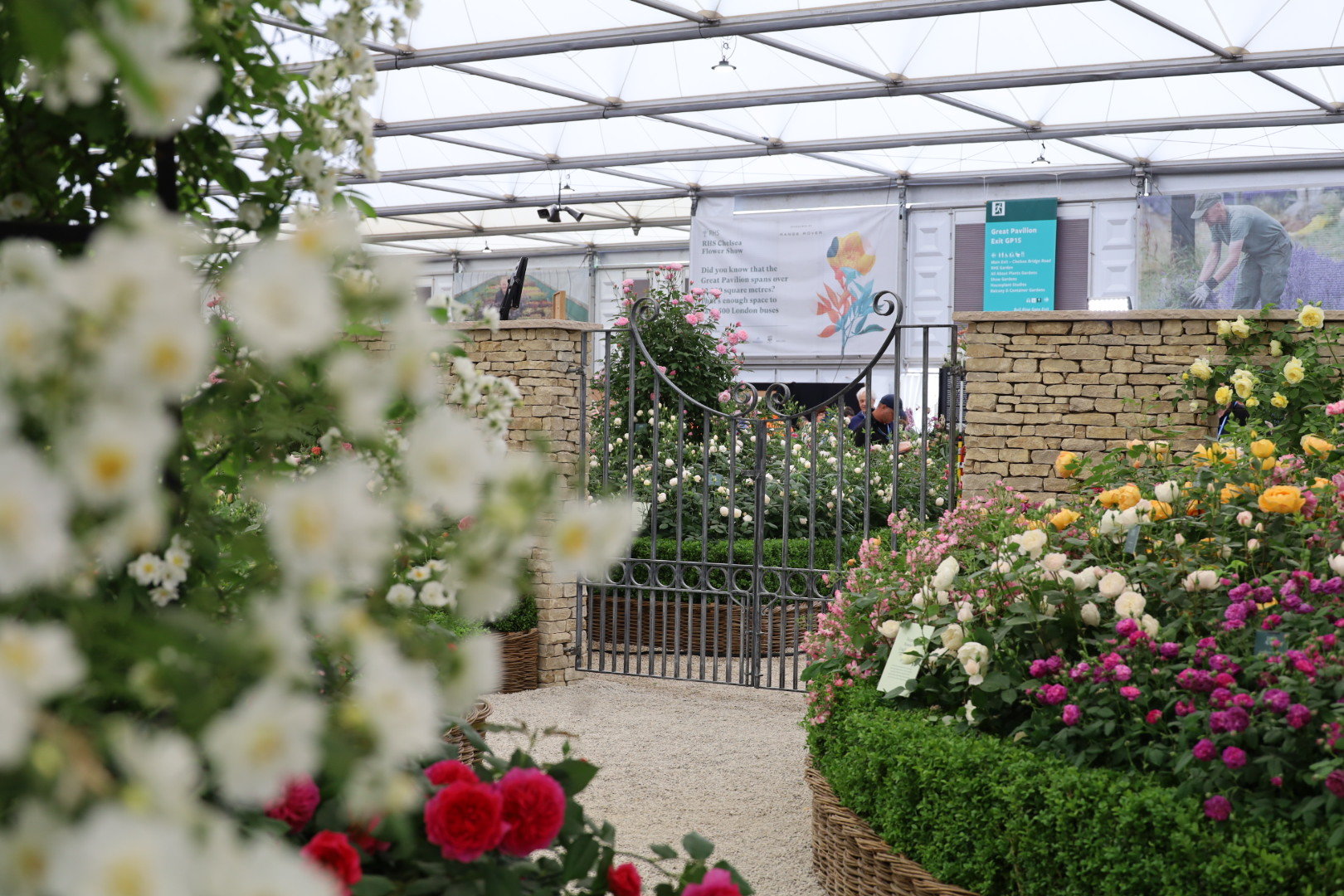
A personal note: I was initially worried when I arrived and there were no rose catalogs on the stand. The catalog has become something of a ritual for me, a tangible record of the varieties I have loved that year. A very kind woman managing the display explained that they were stuck in traffic and would arrive later. She was entirely right. I picked one up in the afternoon, and it was worth the wait.
One more thing worth noting: this year marks the David Austin Roses' 30th gold medal at RHS Chelsea. Thirty. That is not a record, it is a testament to something much deeper, a consistency of craft and vision that very few exhibitors at any show anywhere have managed to sustain.
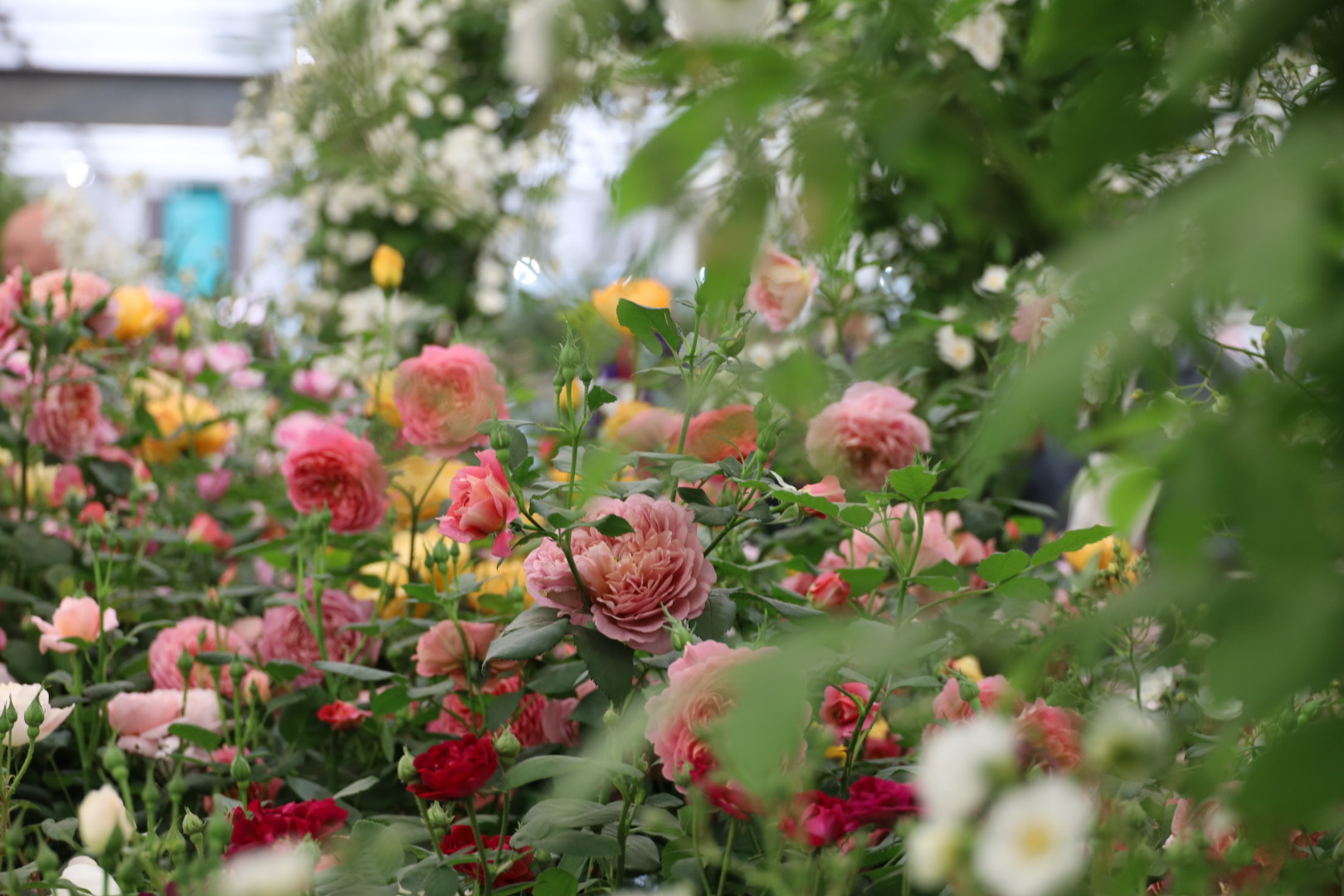
Peter Beales: A Norfolk Garden in Full Bloom
If David Austin is the polished country house, Peter Beales is the grandmother's garden, and I mean that as the highest possible compliment.
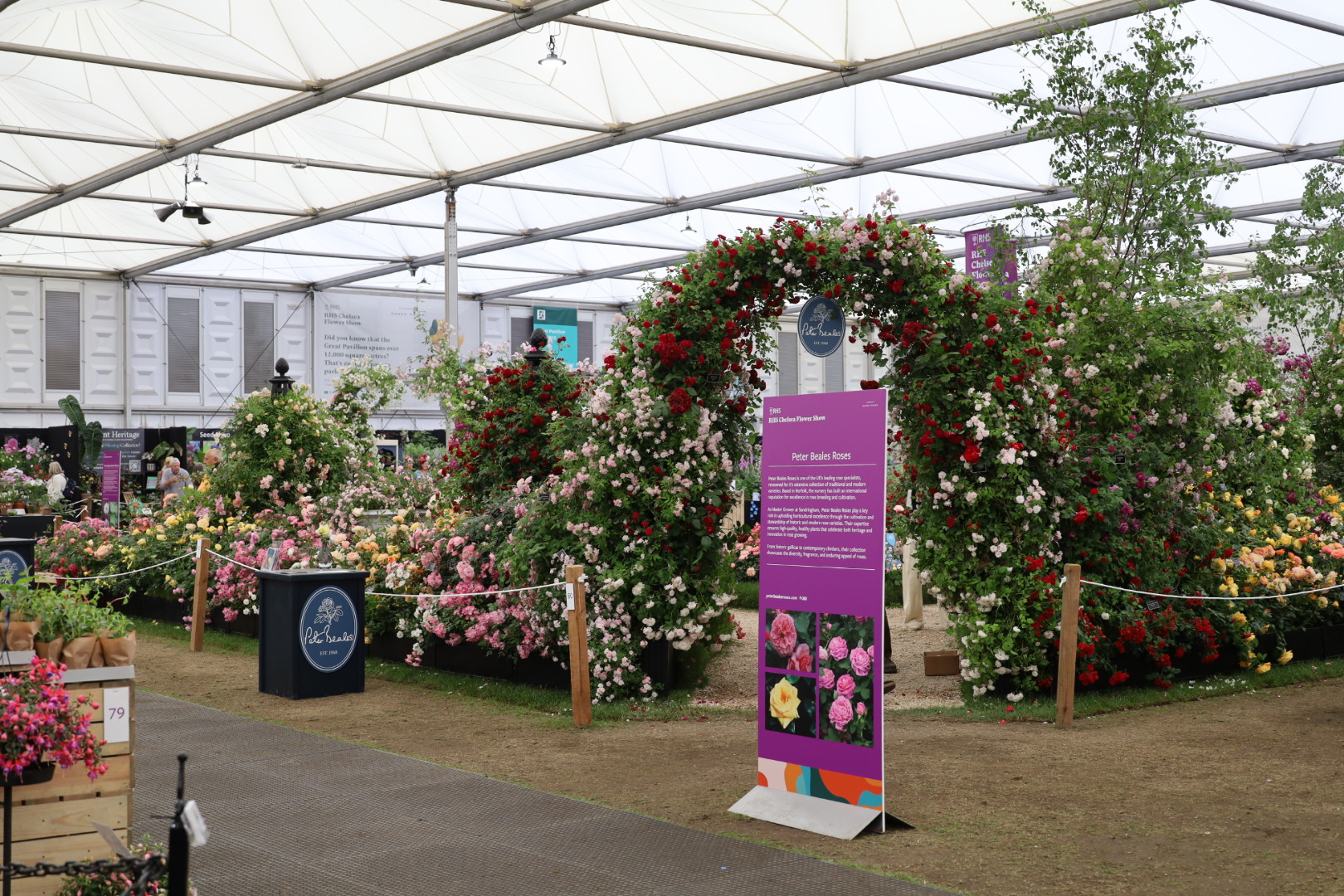
Their stand this year was their biggest Chelsea display yet, over a thousand roses grown at the nursery in Norfolk and brought specifically to the show, and you felt every single one of them. Arches heavy with climbing roses. Dense, lush borders packed with varieties that ranged from ancient species to brand-new introductions. A fountain at the centre, surrounded by the new deep red One Show 20th rose, calm and quietly lovely in the morning light.
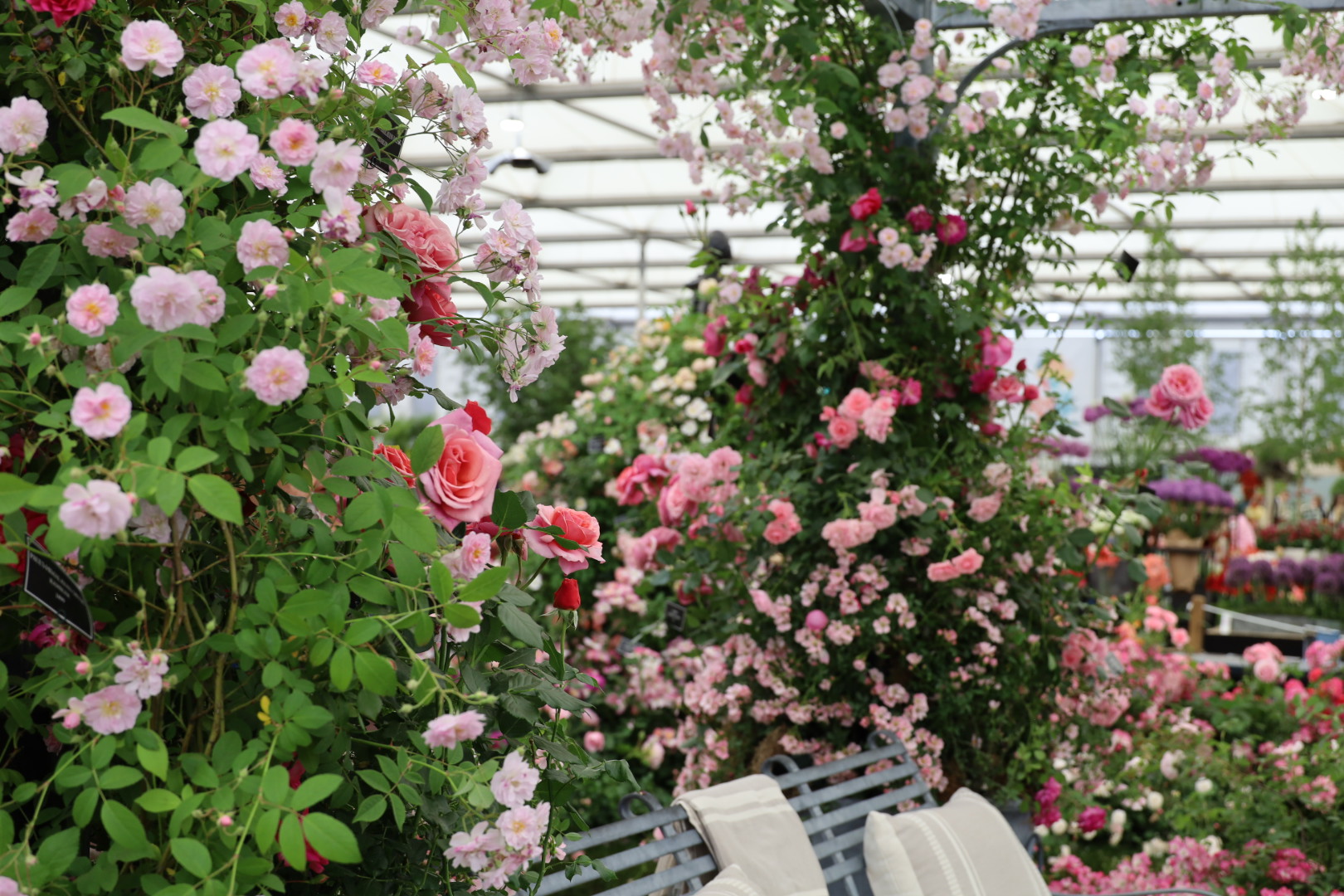
Peter Beales does not shy away from strong colour. Where David Austin tends toward pastels and the quieter end of the spectrum, Beales are unafraid of vivid reds, rich purples, electric oranges. On paper this could feel overwhelming. In practice, they make it work with a kind of cheerful confidence, and the result is a display that feels alive, characterful, and genuinely British in the most endearing sense. It has personality. You can almost imagine the person whose garden it belongs to.
The new introductions were fascinating. Kate Moss is being promoted as their statement launch for 2026, billed as a study in modern elegance and already generating attention. The One Show 20th rose, bred to celebrate twenty years of the BBC programme, had already sold out on the stand by the time I visited, with the man overseeing the display explaining you can only preorder it now online. Five pounds from each sale goes to BBC Children in Need, which makes it a genuinely good story around a genuinely pretty rose.
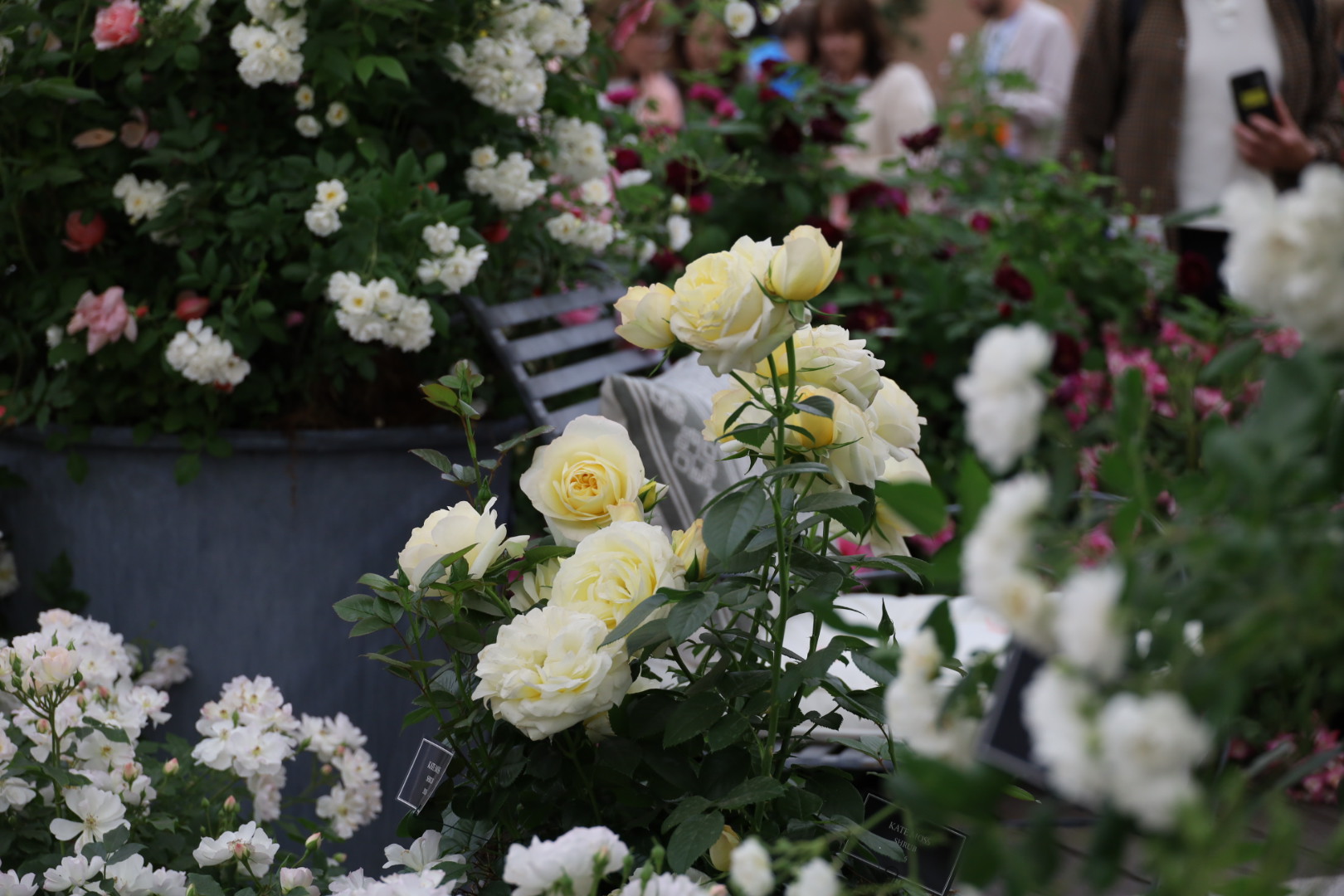
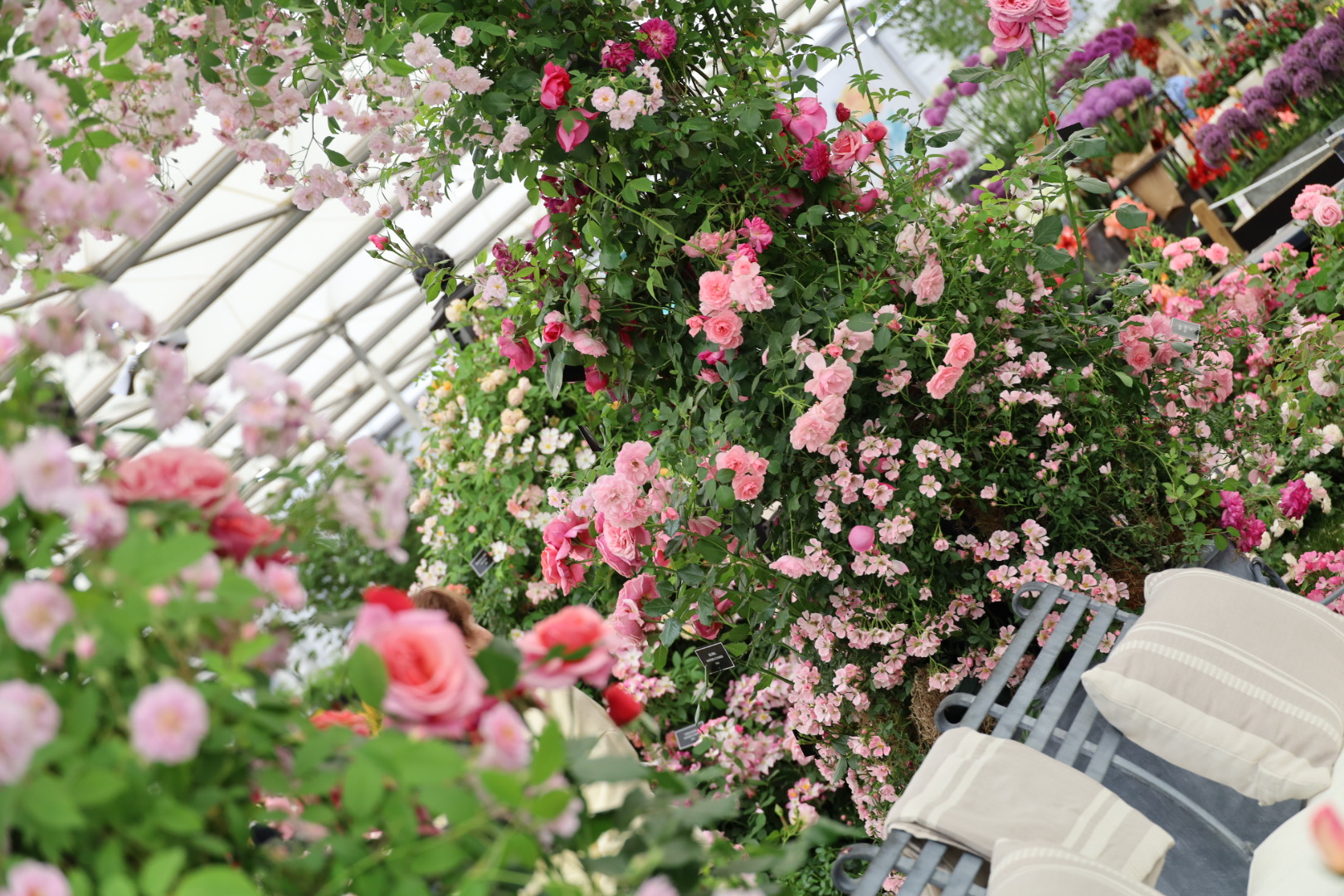
For anyone who loves botanical diversity, this is the stand to linger at. The range of flower forms on display, from tight rosettes to loose-cupped blooms to single-petalled species types, alongside different leaf textures and even some hips in the display, is remarkable. I could happily have painted here for a week.
This year's display earned them their 31st Chelsea gold medal. The medal run stretches back to the 1970s. There is a word for that kind of sustained excellence, and it is not luck.
Harkness Roses: Pink Rose Cloud inside a Volkswagen Van
I want to tell you about the moment I turned a corner in the pavilion and saw the Harkness stand, because I think it captures something that makes Chelsea uniquely wonderful.
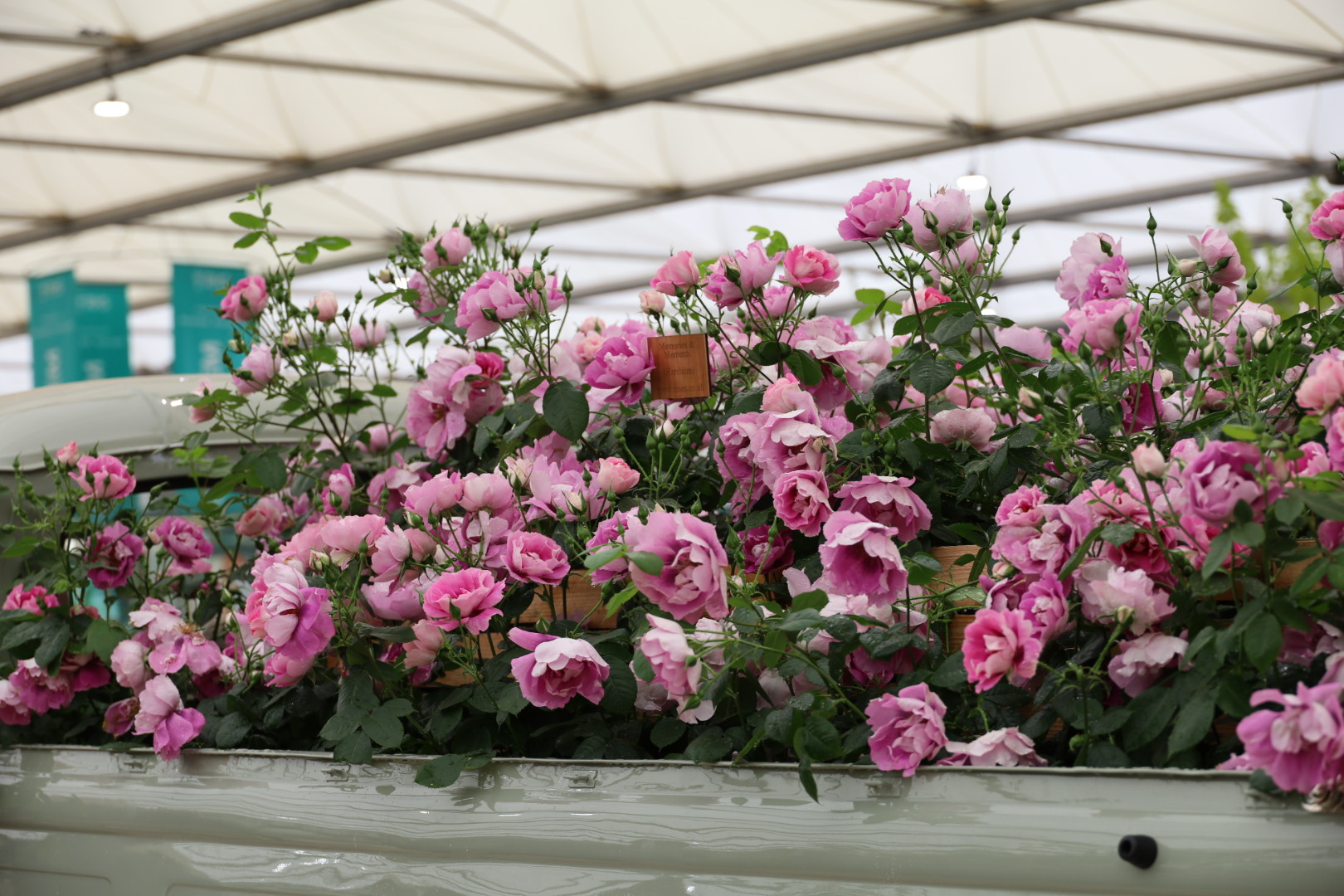
A vintage Volkswagen Beetle, in the softest sage green, absolutely buried in a sea of pink roses. That is it. That is the image. And it worked completely, joyfully, without apology.
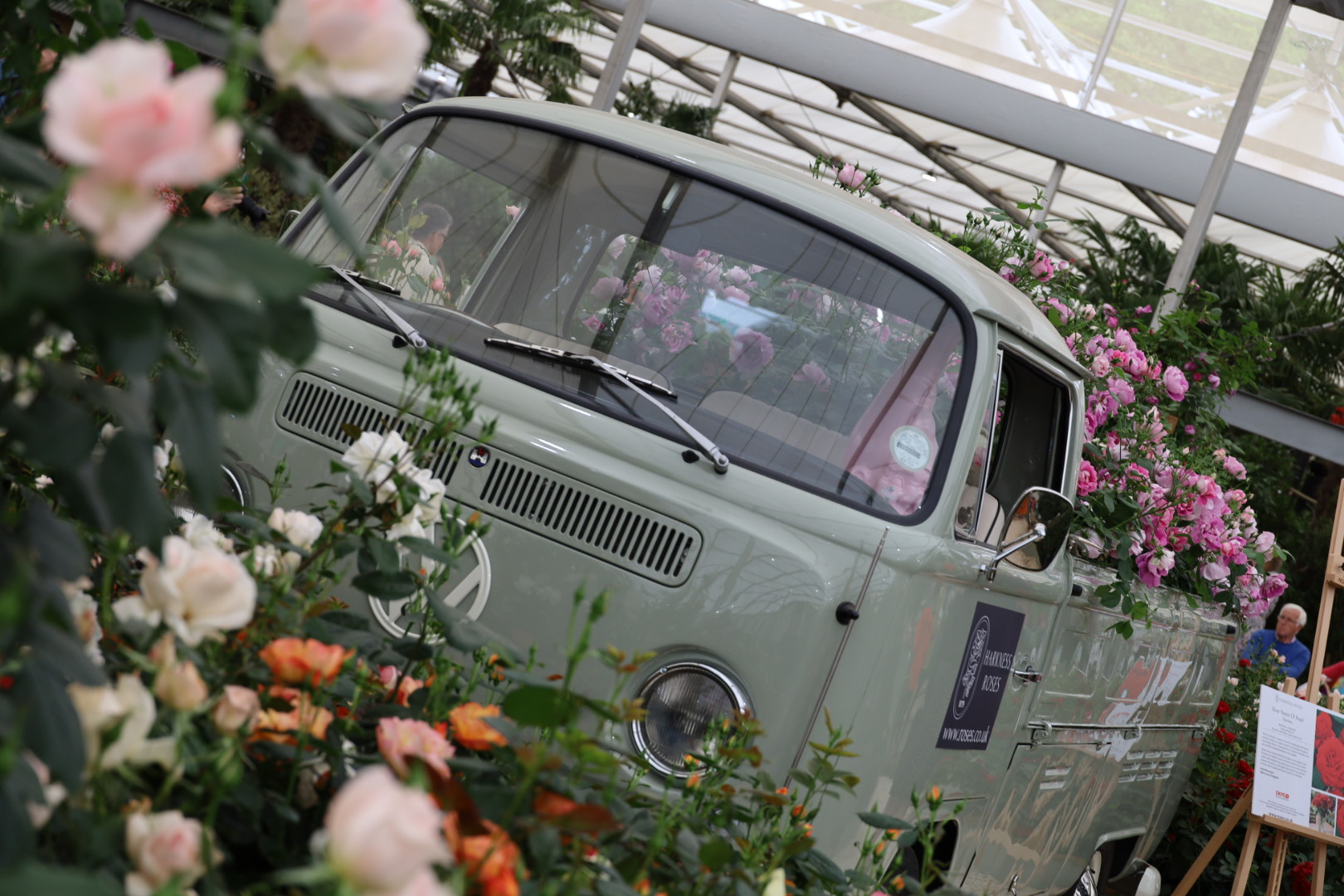
Harkness Roses have been exhibiting at Chelsea since the very first show in 1913. Let that settle for a moment. One hundred and thirteen years of turning up to this same show, to this same pavilion, with roses grown by people who have dedicated their lives to the craft. There is something quietly moving about that kind of continuity.
The rose that captured my attention most on this stand, and which I kept returning to photograph, was Memories and Moments (Harclaim). It is a pink rose, and I know that describing a rose as pink at the Harkness stand in May is not exactly narrowing things down. But this one had a quality I found difficult to look away from, something in the depth of the colour and the way the petals were arranged that felt emotionally resonant rather than simply decorative. There was not a large label identifying it, which meant I had to do some asking around, but once I had the name I understood why it had caught me. Sometimes a rose just finds you before you find it.
Leaving the pavilion, arms laden with both a David Austin and a Peter Beales catalog (I had gone for the Beales one first as insurance in case the Austin catalogs remained stuck in traffic, and ended up with both, which I refuse to regret), I felt genuinely grateful. These three stands alone justify the whole visit. The rose growers at Chelsea are not simply exhibitors. They are, in a very real sense, the reason the show exists in the feeling it creates. The fragrance, the abundance, the extraordinary craft involved in bringing these plants to peak condition on exactly the right day in May.
I just hope this show keeps running for many years to come and keeps giving us these wonderfully, quintessentially British rose moments. There is nothing quite like it anywhere.